
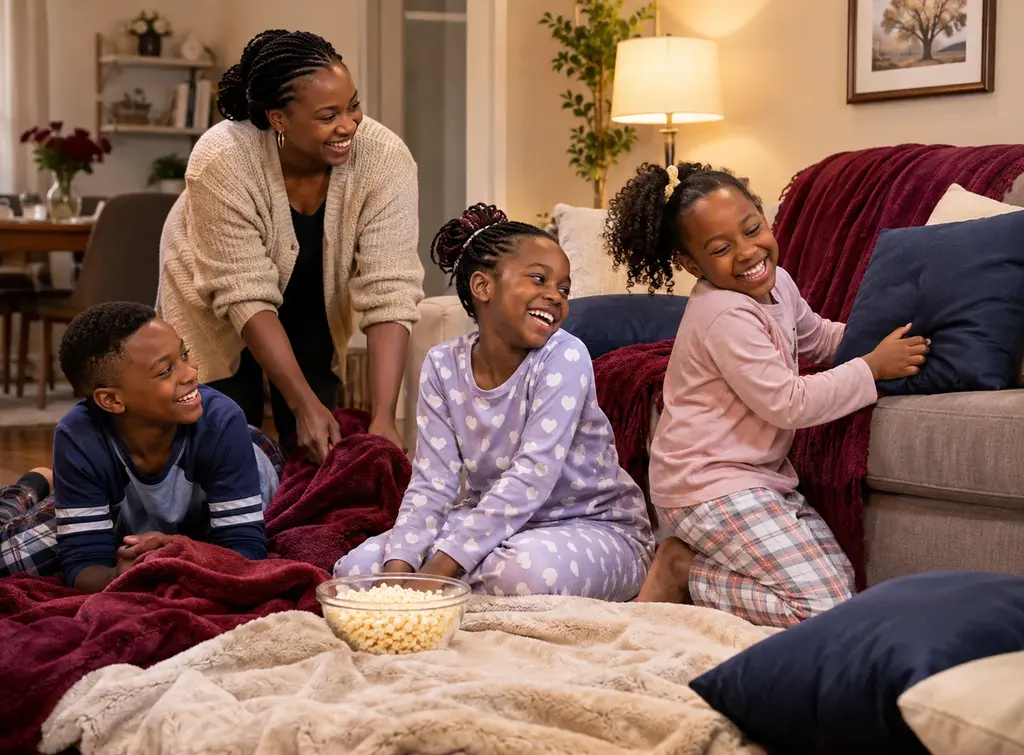
A movie sleepover is one of those childhood plans that sounds simple until you start counting sleeping bags, dinner preferences and the number of opinions about which film to watch. The good news? You don’t need a themed party or a tightly managed schedule. A few sensible decisions before the doorbell rings can leave everyone free to enjoy the evening.
This guide covers the practical side of hosting: invitations, food, activities, the movie itself and what to do when someone is tired or wants to head home. You’ll also find film ideas and a checklist to keep handy.
1. Start with the things that matter
For a first sleepover, a small group is easier to organize than a house full of children. Decide the start and pickup times, the space where guests will sleep, and which adult will be there throughout the night. Tell the other families the plan before the day arrives.
There are a handful of details worth confirming privately with caregivers:
- An emergency contact and a clear plan if a child needs to be collected early.
- Food allergies, dietary restrictions and any essential arrangements.
- Whether the child is happy staying overnight or would prefer a late-over — the fun of the evening, followed by pickup at bedtime.
- What to bring: bedding or a sleeping bag, pillow, pajamas, toothbrush and a change of clothes.
- House rules for devices, photography, posting pictures and shared spaces.
A message you can send
We’re having a movie sleepover on Saturday! Guests can arrive at 5:30 pm and we’ll be ready for pickup around 10:00 am on Sunday. We’ll have dinner, a film, a couple of games and breakfast. Please bring pajamas, a toothbrush and a sleeping bag or bedding. Let me know about food allergies or anything useful for a comfortable night, and the best number to reach you. We’re looking forward to it!
You can keep the invitation that straightforward. Children will provide plenty of excitement themselves.
2. A sleepover schedule that leaves room for fun
A loose order helps. A minute-by-minute itinerary usually doesn’t.
| Example time | What happens | One useful idea |
|---|---|---|
| 5:30 pm | Arrivals and settling in | Show guests the sleeping area and bathroom first. |
| 6:00 pm | Dinner | Build-your-own wraps, pizzas or another meal with familiar choices. |
| 6:45 pm | A group activity | Movie-ticket making, a short guessing game or decorating popcorn bags. |
| 7:30 pm | The main film | Choose from a shortlist prepared beforehand. |
| 9:15 pm | Wind down | Favorite-scene chat, a book, or a simple game without another screen. |
| Morning | Breakfast and pickup | Keep food easy and leave time to collect everyone’s belongings. |
These times are only an example. A two-hour film needs an earlier start than a 75-minute animation, especially if you plan pauses. For younger guests, consider a short film or a single favorite episode instead of a full feature.
3. What movies should you watch at a sleepover?
The best sleepover film isn’t necessarily the newest release. It is one that the group genuinely wants to watch and that works for the children’s ages. A lively comedy may be ideal for one group; another will enjoy an adventure, a musical or a familiar film they’ve watched before.
Before guests arrive, choose three possibilities with the other parents’ preferences in mind:
- One film with plenty of humor and shared fun.
- One adventure, musical or bigger story for a group that wants energy.
- One shorter or less demanding alternative if the original plan doesn’t fit the mood.
Here are six films to consider for different kinds of groups. Before choosing, check each film’s age guidance and content notes:
| Film | Why it can work for a group | Check before choosing |
|---|---|---|
| Monsters University (2013) | School rivalries, colorful comic situations and a story about making friends. | Busy sequences, slapstick and some competitive conflict. |
| The Croods (2013) | A family adventure with creature-filled surprises and plenty to discuss. | Peril, chases and energetic action. |
| Wreck-It Ralph (2012) | Arcade humor, friendship and imaginative worlds. | Rapid visual movement, action and emotional moments. |
| Orion and the Dark (2024) | An imaginative story that can open an interesting conversation afterwards. | Fear-related themes; read the individual film’s notes. |
| Inside Out 2 (2024) | A memorable conversation starter for an older or mixed-interest group. | Emotional intensity and age fit for the specific group. |
| The Goonies (1985) | A friends-on-an-adventure classic for groups who enjoy high-stakes excitement. | Peril, language and scary moments; check the recommended age carefully. |
These examples suit different groups; they are not interchangeable recommendations or a list of films that work for every child. Start with the youngest guest’s age guidance, and then consider content, length and individual preferences.
Browse more: Sleepover Movies · Choose Tonight · How to Choose Movies for Your Child.
A good plan B: If the group isn’t enjoying the film, you can pause, switch to a shorter story or move to another activity. Finishing a movie isn’t a test anyone needs to pass.
4. Games and activities that won’t take over the night
The film can be the main event without being the only activity. Pick one or two extras and keep the rest optional.
- Make your own cinema tickets. Set out colored cardstock, pens and a stamp for an instant living-room premiere.
- Movie bingo. Create a few simple squares such as “someone sings,” “a character solves a problem” or “an animal appears.” Avoid spoilers.
- Invent a movie poster. Guests draw a poster for the film they’re about to see, then compare it with the story afterwards.
- One-minute reviews. Each child can name a favorite scene, give the film a new title or choose a character they’d like to meet.
- A game break. A card game, drawing table or favorite board game works if everyone wants a pause from the screen.
Resist the temptation to prepare ten activities. Children often enjoy the unplanned talking and laughing more than the elaborate entertainment.
5. Sleepover food that is easy to share
A simple main meal and a snack station usually do the job. Make-your-own pizzas, wraps or sandwiches let guests choose what goes on their plates; fruit, popcorn and water can be ready during the film. Check allergies and the agreed food arrangements before serving anything.
Give everyone a place to put drinks. If the group is watching in dim light, lidded cups and a small lamp can prevent a surprising number of spills.
The goal is a comfortable evening, not a cinema concession stand in your kitchen.
6. Set up the living-room cinema
Test the screen, streaming service or disc before guests arrive. Set a comfortable starting volume, check that everyone can see, and have captions available. Leave a little light on if the room feels better that way.
Clear the floor of trailing cables and sharp-edged obstacles. Spread pillows and blankets where people can move without stepping over one another. Keep water, tissues and a trash can nearby. Show everyone where the bathroom is, and make sure the route stays easy to use when the lights are lower.
Small idea, big difference: Put the three shortlisted film titles on cards. Guests can see the options, talk about them and make the decision together. It also saves the evening from an endless scroll through streaming menus.
7. Make room for different preferences
One guest may want to know the story in advance. Another wants every surprise. Some children enjoy exciting action; others prefer a gentler story. You don’t have to guess which kind of evening everyone will like.
Let guests know that the film can be paused, captions can be switched on, and there’s somewhere to sit away from the screen for a few minutes. These are ordinary, useful options for a mixed group of friends.
If you’re hosting a neurodivergent guest, a little advance information can be especially welcome. Share the broad plan and the film shortlist ahead of time. A caregiver may mention a familiar snack, a preferred sleeping arrangement, a comfort item or a helpful way of handling a change in plan. Discuss personal arrangements privately and with the guest’s own wishes in mind.
For more film-specific help, see TFFC’s Low-Stimulation Movies & TV Guide and The Sensitive Child’s Movie Guide. Watch Your Way brings these resources together with age recommendations, content guidance and practical planning ideas.
8. What about bedtime — and the next morning?
Agree on the sleeping arrangements before the evening starts. Children might talk a little longer than usual; give the group a gentle wind-down period instead of starting another exciting film just before bed.
Make sure everyone knows where to find the hosting adult during the night. If a guest misses home, listen calmly and offer to call their family. A pickup is always an acceptable change of plan. Some children discover they enjoy the party but would rather sleep in their own bed — and that’s fine.
In the morning, a familiar breakfast and a clear pickup time are usually enough. Ask guests to gather chargers, pillows and small belongings before their families arrive.
9. Host checklist
Before the sleepover
- Agree on guests, arrival and pickup times.
- Confirm emergency contacts, allergies and essential arrangements.
- Check sleeping spaces, bedding and bathroom access.
- Explain house rules for devices and photographs.
- Make a shortlist of three age-appropriate films.
- Test the film source, sound and captions.
- Plan an easy dinner, snacks, water and breakfast.
- Prepare one game and an optional quieter activity.
When everyone arrives
- Show the group where everything is.
- Agree on the film and the approximate finish time.
- Explain that breaks and changes of plan are possible.
- Keep contact and pickup information at hand.
The next morning
- Check everyone has their belongings.
- Confirm agreed pickup arrangements.
Frequently asked questions
What is a good age for a first sleepover?
There’s no universal age. It depends on the child, the friendship, the home and how comfortable everyone feels with the plan. A smaller group or a late-over can be a good first step.
What if the children can’t agree on a movie?
Offer three age-appropriate options and let the group vote or choose fairly. If nobody is enthusiastic, a shorter film or another activity is better than a long argument over the remote.
Do we need to watch two films?
Usually one feature film is plenty alongside dinner, games and bedtime preparations. Keep a short film or familiar episode available as a backup, not an obligation.
Should the host arrange a quiet space?
If possible, yes. A comfortable place away from the screen gives anyone the option to take a break, read or rest, whether or not they have any particular sensory preference.
What if someone wants to go home?
Contact their caregiver and follow the agreed pickup plan. The child can still have had a wonderful evening even if they don’t stay overnight.
The invitations are sent. The snacks are planned. Now choose a film everyone will be excited to see. Explore Sleepover Movies or start with Choose Tonight.


