
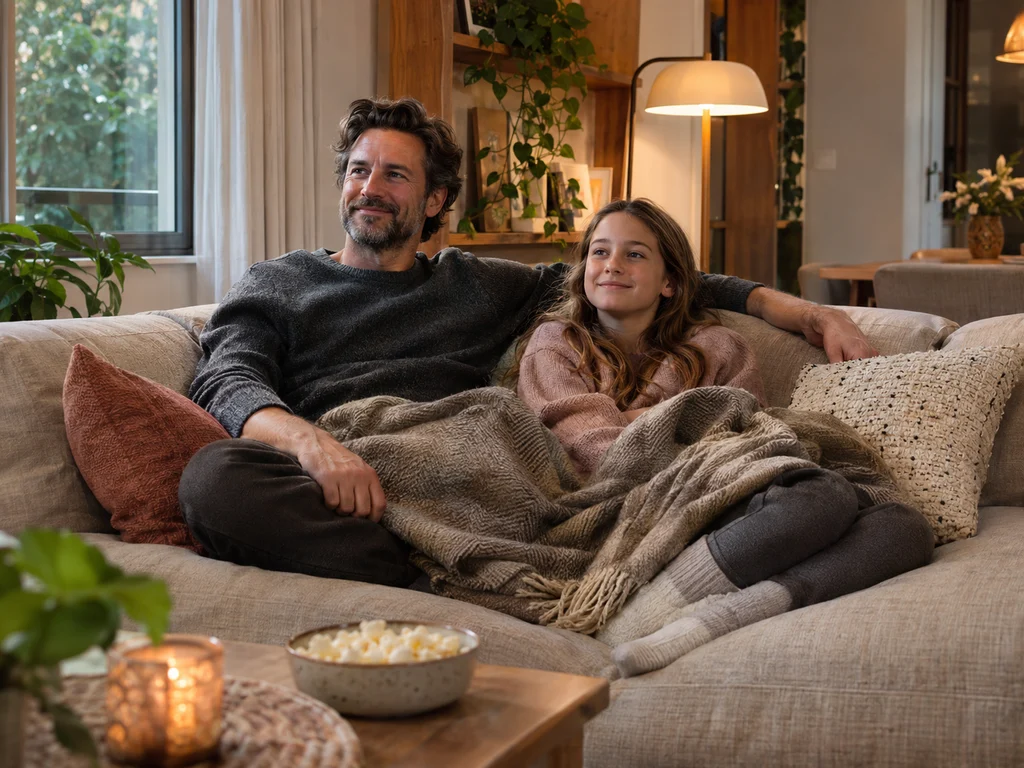
Start with the people, not the equipment
The same film can feel different in a cinema, on the living room television or on a small screen. Before moving furniture or changing settings, ask everyone what makes it easier for them to settle in. One person may want to sit near the screen, another may prefer a little distance, and someone else may want a familiar blanket or the freedom to move around.
There is no single perfect arrangement. A comfortable setup is one that can change without turning every adjustment into a discussion.
Arrange the space together
Try a short preview before the movie begins. It is easier to adjust the room during an opening menu than halfway through an important scene.
- Seating: Offer more than one comfortable place if possible. A chair, a floor cushion and the sofa can all be good choices. Make sure anyone who wants to move or leave can do so without climbing over other viewers.
- Screen: Choose a distance that feels comfortable to the people watching. Check for reflections and keep pathways clear, especially if the room will be darkened.
- Light: Ask whether people prefer a darker room or a small light left on. A nearby lamp can also make it easier to find a drink, a blanket or the door.
- Sound and captions: Begin at a volume everyone is happy with. Captions may help someone follow dialogue, especially when people have different listening preferences. They can be switched on even when no one has a hearing difficulty.
- Small comforts: Keep water, tissues and anything viewers regularly need within reach. This prevents unnecessary interruptions and makes it easier for someone to stay settled.
Make breaks ordinary
Agree in advance that pausing is fine. The remote should be easy to find, and viewers should not have to explain why they need a moment away. For a group, a simple question such as “Shall we take five minutes?” is often enough.
If someone returns after a pause, a short reminder of what happened can be more welcoming than insisting they catch up alone. If a viewer would rather stop for the evening, that is also a valid outcome. Finishing the film is not the measure of a successful movie night.
A quick five-minute setup
- Ask each viewer where they would like to sit and whether they want the room light on.
- Check the picture from every seat and remove anything blocking the way out.
- Play a short moment to agree on volume and whether to use captions.
- Put the remote and a few useful comforts somewhere easy to reach.
- Choose the film together, with its age guidance and content notes in mind, and agree that the plan can change.
The most useful setup is one that gives everyone a say—and makes changing the plan easy.


