
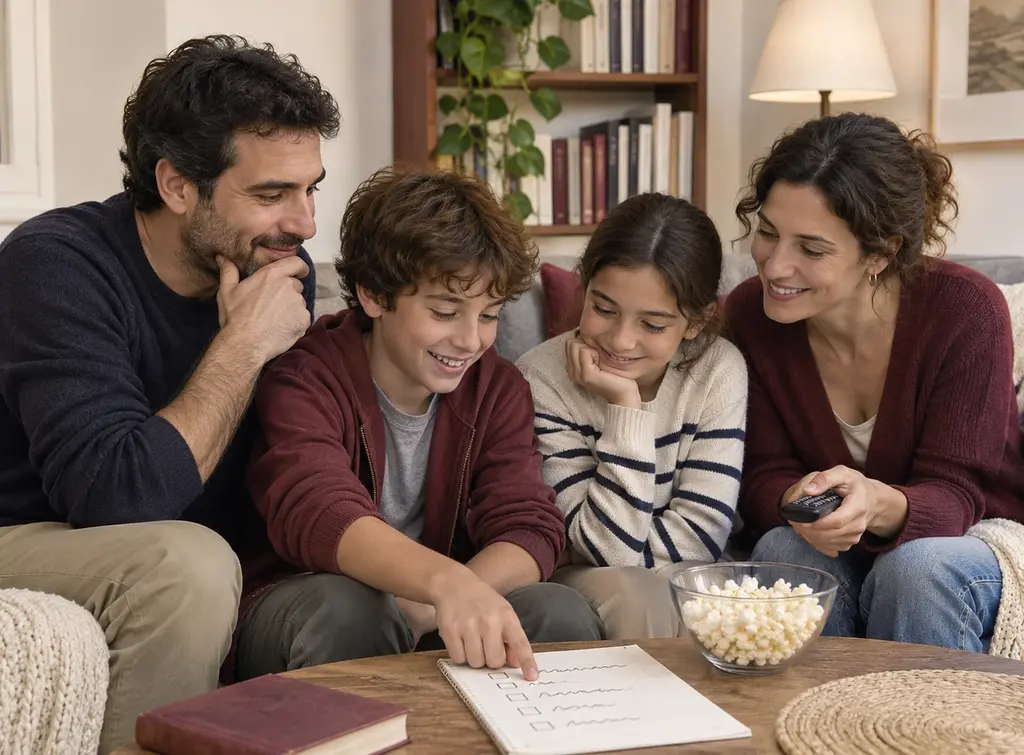
You finally have an evening when everyone is home. The sofa is free, the snacks are ready — and suddenly nobody can agree on what to watch. Twenty minutes later, you’re still scrolling through titles.
A good family movie night doesn’t need much organizing. The trick is to settle a few practical things early: who is watching, how long you have, what kind of story people are in the mood for, and how you want the room to feel. Then you can get on with enjoying the film.
1. Choose the film before the snacks are cold
Start with the people who will actually watch. A three-year-old, a nine-year-old and two adults may not want the same thing from a story. When ages vary, the youngest viewer’s minimum age is an important boundary, but it isn’t the only consideration. The older children still need something to enjoy, and everyone may have a different appetite for suspense or sadness.
Try making a shortlist of two or three films rather than asking everyone to scroll through a whole streaming service. Give each person a chance to put forward a favorite. Then compare the options using four questions:
- Age: Does the film fit everyone who will watch? TFFC shows both Minimum Age and Recommended Age.
- Mood: Would you rather laugh, follow an adventure, enjoy music or settle into a reflective story?
- Time: Is there enough time for the full film, including a break?
- Content: Are there specific scary, sad or intense moments someone would like to know about in advance?
For a faster choice, start with Choose Tonight. For the deeper selection questions, How to Choose Movies for Your Child explains TFFC’s age guidance, interests and Viewing Needs in more detail.
2. Pick a film for the evening you want
Family movie night is not a genre. One Friday can be a sing-along; another can be a mystery that keeps everyone guessing. Use the collection that matches the mood rather than assuming every family night needs a reassuringly gentle film.
| Tonight’s mood | Start here |
|---|---|
| A lively film with plenty of laughs | Family Movie Night or Movies for a Laugh |
| Songs, performances and musical excitement | Music & Musicals |
| A less demanding evening | Movies for a Relaxed Evening |
| Stories with a steadier pace | Films with a Steadier Pace |
| A shorter watch | Movies for When You’re Short on Time |
Collections give you a useful place to begin; they don’t replace the film’s individual age and content notes.
3. Make the room a place people want to stay
Move the chairs or cushions so everyone can see without leaning around another person’s head. Check the screen’s brightness, test the volume from where the children will sit, and leave a small light on if that works better for the room. Keep captions available; they can help when someone misses a line or the room isn’t perfectly quiet.
You don’t need to buy a projector or turn the living room into a cinema. A comfortable view of the screen, water within reach and a clear route to the bathroom matter much more.
If younger children are likely to get restless, leave space to move rather than expecting everyone to stay motionless through a long film. For a family member who prefers fewer interruptions, let them know roughly when you plan to pause.
A simple improvement: Decide beforehand whether phones are away for the film, available for emergencies, or part of an agreed quiet activity. A shared expectation avoids negotiating it in the middle of a favorite scene.
4. Dinner, snacks and an easy beginning
Popcorn is popular for a reason, but family movie night doesn’t require special treats. A tray of fruit, sandwiches or whatever the family likes is fine. If dinner will be eaten in front of the screen, choose something easy to manage in dim light.
Give the evening a small beginning: set the snacks out, let somebody introduce the chosen film, and press play when everyone is ready. Younger children often enjoy being given a simple job, such as making the tickets or deciding where to put the cushions.
Keep the preparation short. The film is the event.
5. What if one person wants something different?
Sometimes the best answer is a fair vote. Other times the youngest viewer’s age or an important content concern rules out an option. You can say why without making anyone feel responsible for spoiling the evening.
If two children are at very different stages, try alternating who chooses across different nights, within age-suitable choices. A film that feels familiar to one child may be new to another. And there’s nothing wrong with a rewatch when everyone enjoys it.
Some viewers love high energy, sudden jokes and big adventures. Others prefer to know more about the story first. A useful family conversation is simply: “Do we want something exciting tonight, or something easier to settle into?”
The film’s story, age guidance, content notes and exact runtime are useful starting points. Encourage everyone to share any preferences they want considered.
6. Give the ending a little room
The credits don’t have to mean everyone gets up immediately. You might ask one question: “Which scene would you tell a friend about?” or “Who surprised you most?” If nobody feels like discussing it, that’s fine too. Some films are more enjoyable when you simply sit with them for a moment.
For an emotional film, avoid demanding a big conversation from a child who doesn’t want one. A favorite scene, a laugh or a quick comment can be enough. Children who want to talk more can do so later.
7. The five-minute family movie night checklist
- We have enough time for the film and a possible pause.
- We’ve checked ages and any important content notes.
- We have two or three options everyone can consider.
- The screen, sound, seating and captions are ready.
- There’s water, and any food is prepared safely.
- Everyone knows that taking a break is possible.
- We have a simple plan for what happens after the film.
Common questions
How do we choose a film for children of different ages?
Start with the youngest viewer’s minimum age boundary, then compare the other children’s interests and the film’s individual story demands. Try the Wide Age-Gap Family Movies collection for a starting point, but check the particular film.
What if we only have an hour?
Choose a short film or special rather than stopping a feature halfway through, unless the family actually enjoys watching in installments. Compare the exact runtime before pressing play.
Is it okay to watch the same film again?
Absolutely. Familiar films can be an enjoyable tradition, and knowing the characters or the ending may be part of the appeal. A rewatch doesn’t mean a family is missing out on new cinema.
How can movie night work for different sensory preferences?
Keep volume and lighting adjustable when possible, make captions and a pause available, and decide together whether the group wants excitement or a gentler atmosphere. Use individual film information rather than assuming everyone with the same label enjoys the same thing.
Less scrolling, more watching. Choose Tonight · Browse Family Movie Night.


