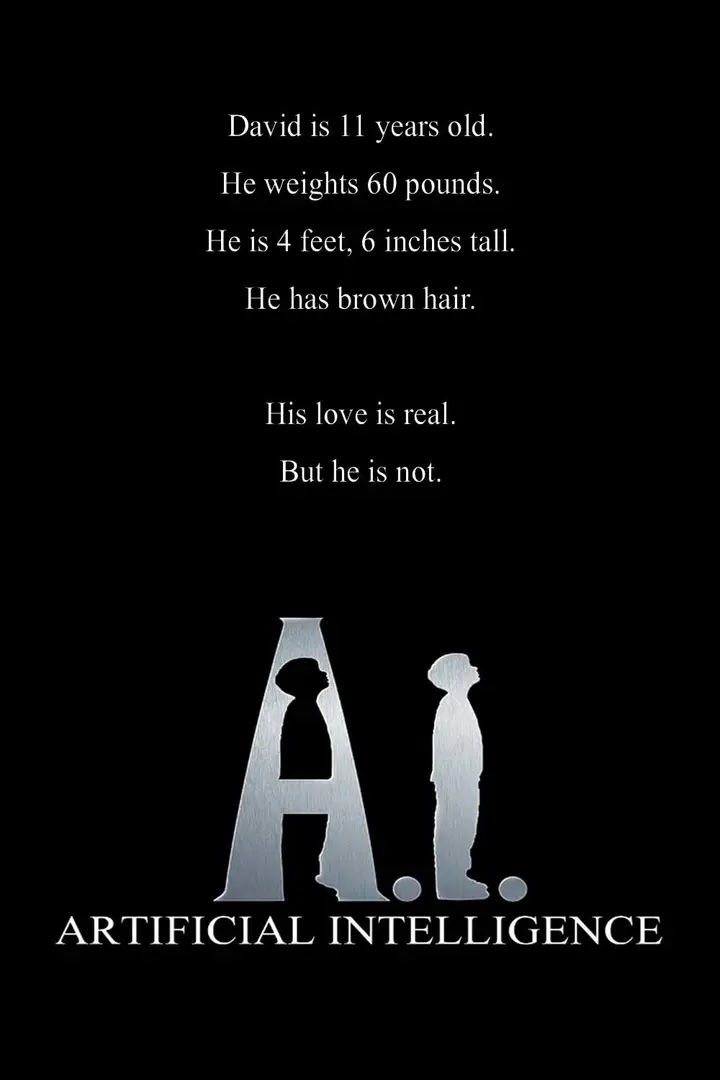
A.I. Artificial Intelligence
AgeMinimum 11Recommended 12+
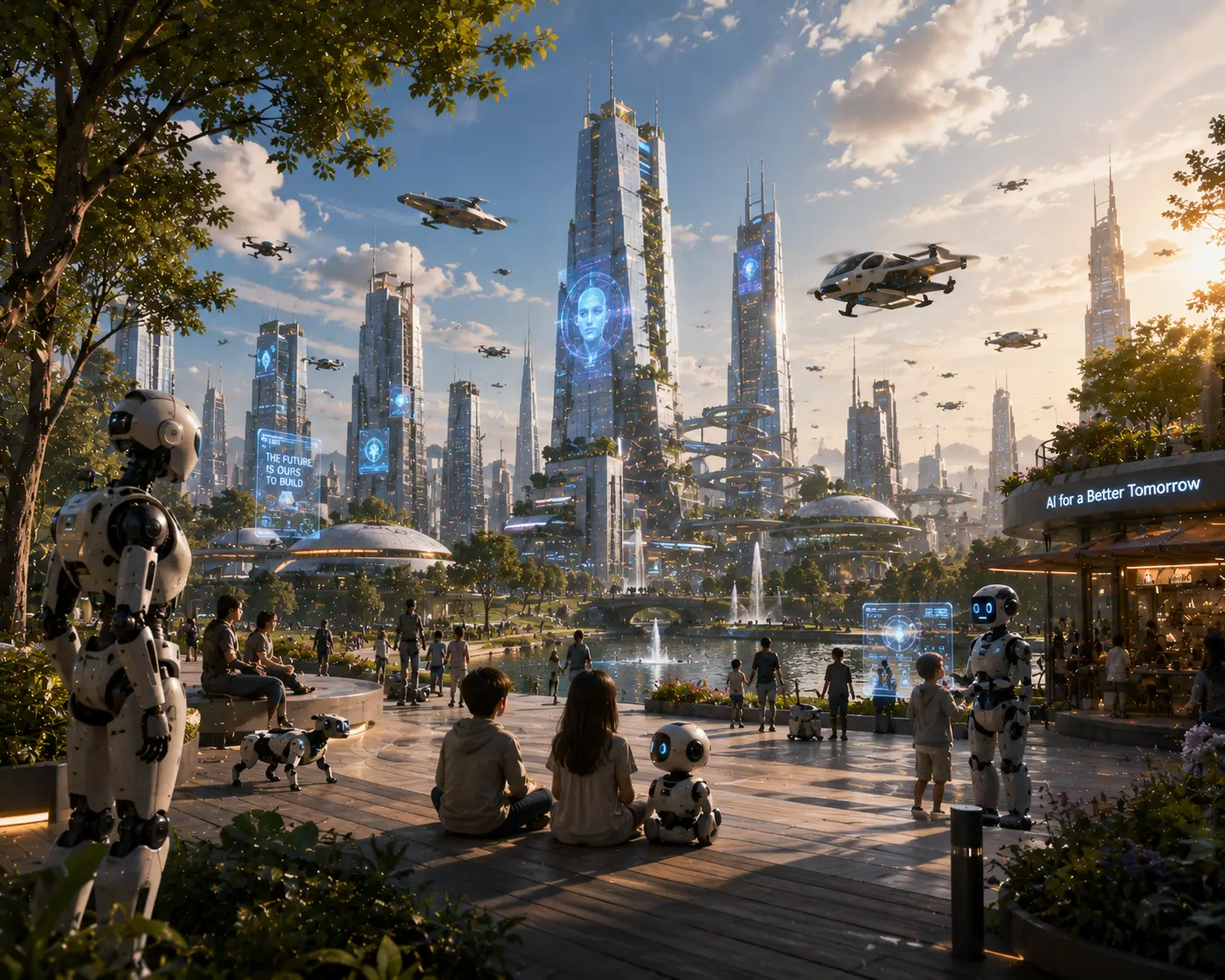
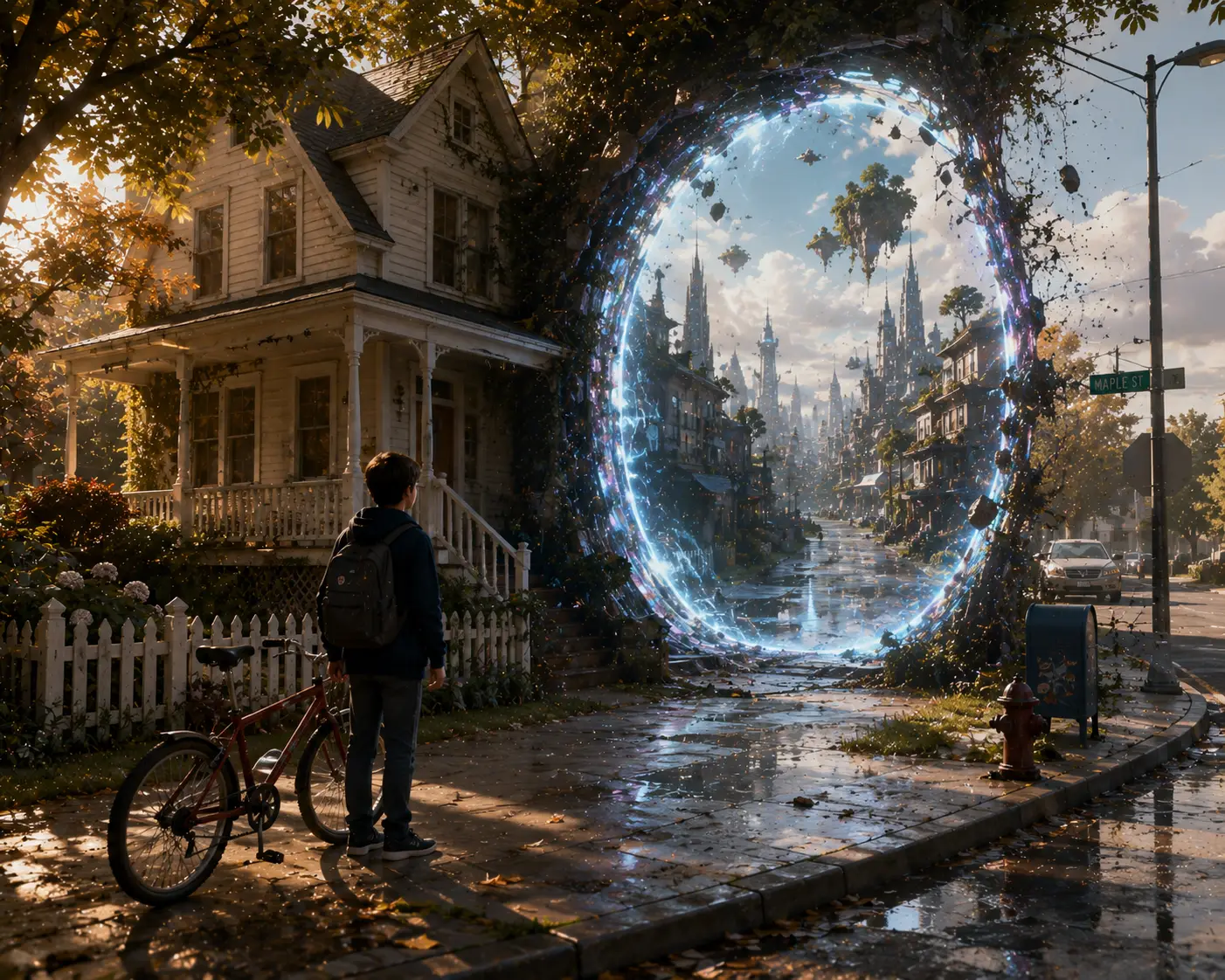
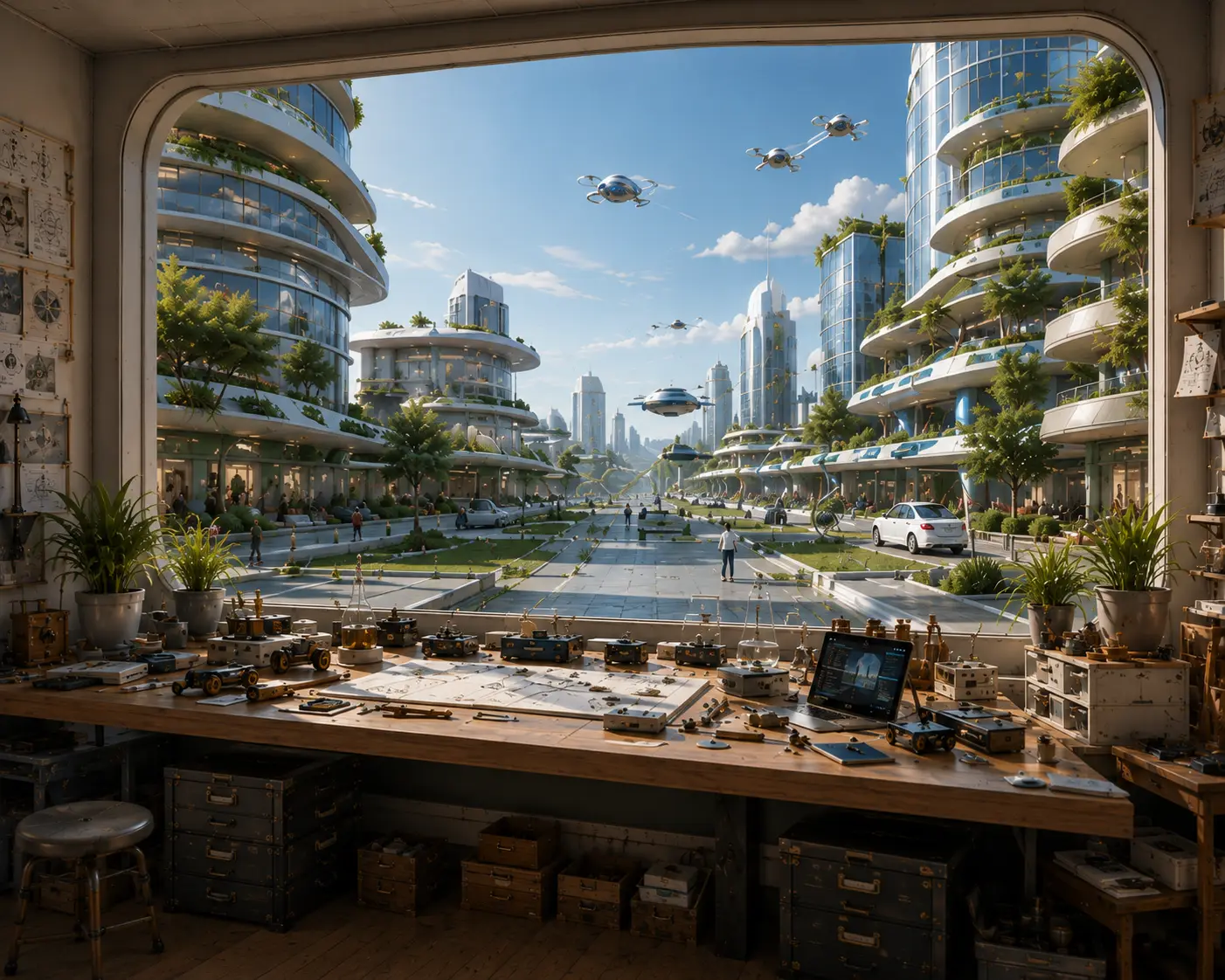
A visually stunning science fiction journey of wonder, emotion, and discovery as a robot boy explores a futuristic world while searching for love and a place to call home.
In a future where advanced robots live alongside humans, David is a highly developed artificial child created to experience love. After becoming part of a human family, David begins a journey beyond the world he knows, entering a future filled with extraordinary technology, unfamiliar places, and unexpected challenges. Searching for a way to be loved and accepted as a real child, David discovers a world that forces him to question love, memory, and what it means to belong.
- Release Year
- 2001
- Runtime
- 146 min
- Studio
- Warner Bros.
- Format
- Live Action
- Genre
- Drama, Science Fiction
- Mood
- Sad, Emotional
- MPAA Rating
- PG-13
A.I. Artificial Intelligence combines the wonder of science fiction with the emotional perspective of a child searching for something deeply human: the feeling of being loved. David's journey begins inside a family home, where he experiences affection and connection, but also uncertainty about whether he truly belongs.
As David travels through a changing future world, the film moves between moments of imagination, mystery, danger, and quiet emotion. Its futuristic setting creates a sense of discovery, while David's search gives the adventure a personal meaning. He is not searching only for answers about technology. He is searching for a place where he feels accepted.
The relationship between humans and artificial beings creates one of the film's central questions: are feelings and memories enough to create a life that feels meaningful? David's experiences challenge the way people define love and connection, showing that the desire to be cared for is not limited by where someone comes from.
Through its visual imagination and emotional storytelling, A.I. Artificial Intelligence creates a science fiction experience unlike traditional futuristic adventures. Beneath its advanced technology and unfamiliar worlds is a simple story about a child searching for love, understanding, and a place to call home.
Why It Stands Out
David is programmed to love Monica, but she cannot promise him a permanent place in her family. Spielberg builds his science fiction around that unequal bond, giving the futuristic journey a painfully personal question.
Parents’ Insight
David's journey explores the importance of empathy and the way people understand those who seem different from themselves. The story invites families to think about kindness, compassion, and the qualities that create meaningful connections.
The film also introduces thoughtful ideas about technology, emotions, and the responsibilities that come with creating something capable of experiencing the world.
Parents’ Guide
What to know before you press play
Six things parents ask about, rated on the same scale for every film and series in the collection.
- Scary intensity
- Moderate (3 of 5)
- Violence
- Mild (2 of 5)
- Language
- Minimal (1 of 5)
- Emotional intensity
- Moderate (3 of 5)
- Sexual content
- Mild (2 of 5)
- Substance use
- Mild (2 of 5)
Content notes
- A long, emotionally heavy, sometimes disturbing meditation on love and abandonment; best for older teens
Questions Parents Ask
What is A.I. Artificial Intelligence about?
In a future shaped by climate change and advanced robotics, David is a highly sophisticated robotic child designed to experience unconditional love. Adopted by a grieving couple whose biological son lies in suspended animation, David initially seems to offer the family a second chance at happiness. When their real son unexpectedly recovers, however, David's place within the family slowly unravels.
Abandoned in a world that sees intelligent machines as disposable, David embarks on an extraordinary journey inspired by the story of Pinocchio, believing that if he can somehow become a real boy, his mother will finally love him again. His search carries him across dazzling futuristic cities, dangerous spectacles, and the distant future itself, asking profound questions about love, memory, mortality, and what truly defines humanity.
What age is A.I. Artificial Intelligence suitable for?
Minimum age: 11. Recommended age: 12+. Although there is relatively little graphic violence, the film explores abandonment, grief, mortality, loneliness, artificial consciousness, and existential questions with unusual emotional depth. Several scenes involving robots being destroyed and David's desperate search for love may be upsetting for younger viewers. Families with older children who enjoy thoughtful science fiction will find rich opportunities for discussion.
Is A.I. Artificial Intelligence scary?
- Emotional abandonment
- Threatening situations
- Robots destroyed in public spectacles
- Dark futuristic imagery
- Existential themes
- Graphic horror
The film's strongest impact comes through emotion rather than fear. Several sequences create genuine tension, particularly David's abandonment, the Flesh Fair arena, and moments of isolation. Rather than frightening monsters, the story presents unsettling questions about love, identity, and what it means to exist.
Is A.I. Artificial Intelligence worth watching?
One of Steven Spielberg's most ambitious films, A.I. Artificial Intelligence blends spectacular science fiction with intimate emotion, creating a moving meditation on love, consciousness, and humanity that continues to inspire discussion decades after its release. Originally developed for many years by Stanley Kubrick before Spielberg completed the project, the film combines Kubrick's philosophical curiosity with Spielberg's emotional storytelling. The result is unlike almost any other family-oriented science fiction film. Its futuristic world feels imaginative without overshadowing David's deeply personal journey. Every technological wonder serves one central question: if a machine can genuinely love, does that love become any less real? Few science fiction films invite such lasting reflection while remaining emotionally accessible through the eyes of a child.
What is A.I. Artificial Intelligence based on?
A.I. Artificial Intelligence is based on the short story “Supertoys Last All Summer Long,” written by Brian Aldiss and first published in 1969. The film greatly expands the brief premise into a futuristic journey about artificial consciousness, parental love, abandonment, and the desire to become human. Stanley Kubrick developed the project for over a decade before handing directing duties to Steven Spielberg, which is why the finished film blends Kubrick's colder philosophical questions with Spielberg's more emotional, fairy-tale-influenced storytelling.
Talk About It
Programmed to love Monica, artificial child David pursues the Blue Fairy across centuries, turning a family experiment into a tragic search for recognition and permanence.
- David is created specifically to love his adoptive mother, whether or not she chooses to love him back. What is unfair about that arrangement from the start?
- How does Teddy protect David while understanding more than he says?
- Would you activate a child robot designed to love permanently?
- What would you tell David before he follows Gigolo Joe?
- Why does Martin provoke David after returning home?
- How does Monica’s abandonment differ from a simple machine disposal?
- Which encounter most changes David’s understanding of the world?
- Why can one perfect day not give him an ordinary childhood?
Turn this film into a ready-to-use class discussion
Use the Teacher Resources already attached to this film. Choose the questions you want, then print, copy or share the result.
Similar Movies
A robot child's search for a mother's love he was never truly meant to have gives A.I. an unusually aching, adult-leaning edge for this kind of story. The rest keep the same core question of an artificial being seeking real connection, but in gentler, more reassuring shapes.
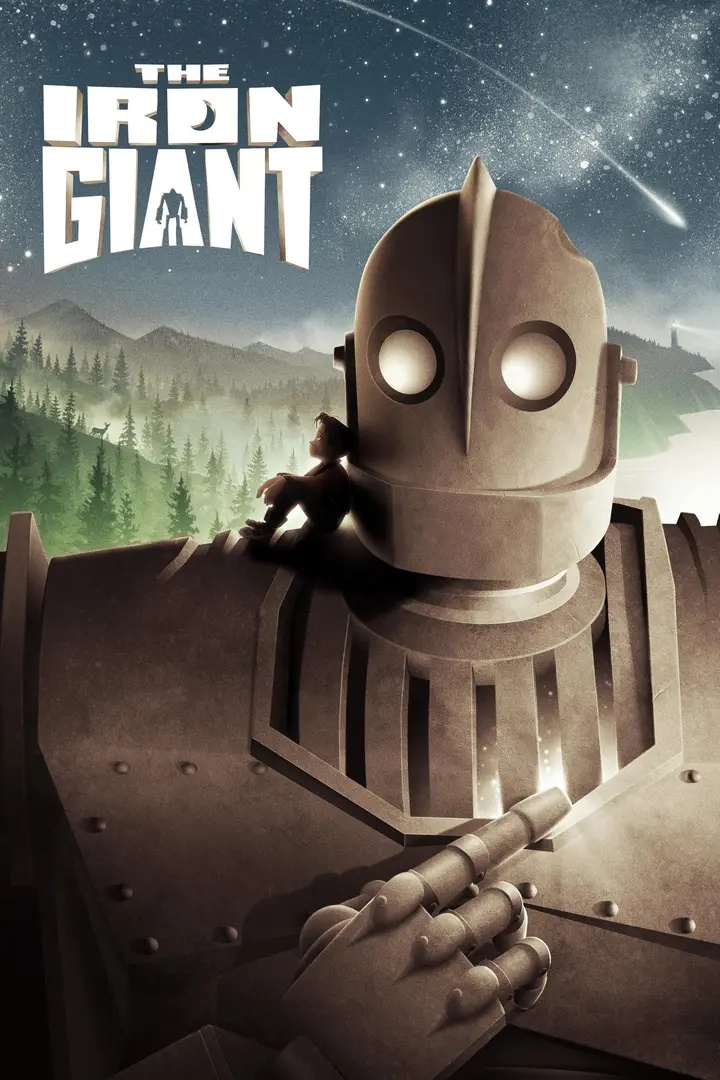
The Iron Giant
A lonely boy and a giant machine from the stars discover friendship, compassion and the frightening responsibility of choosing who we become.
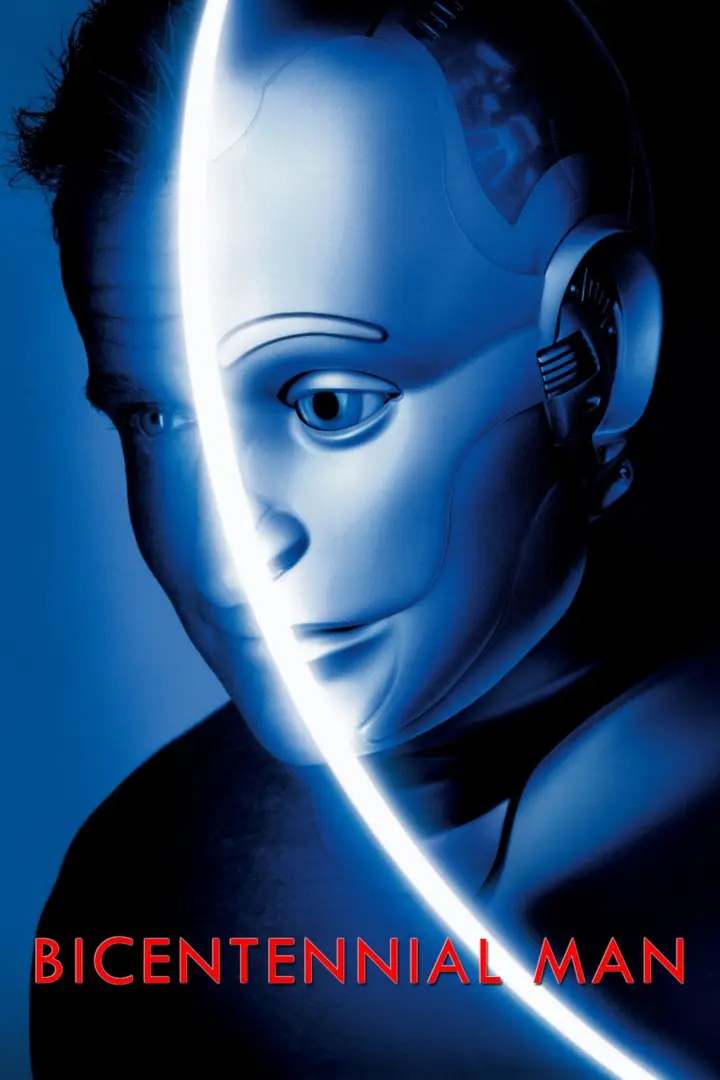
Bicentennial Man
A science fiction journey through passing generations and the life of a household robot who becomes something far more personal.
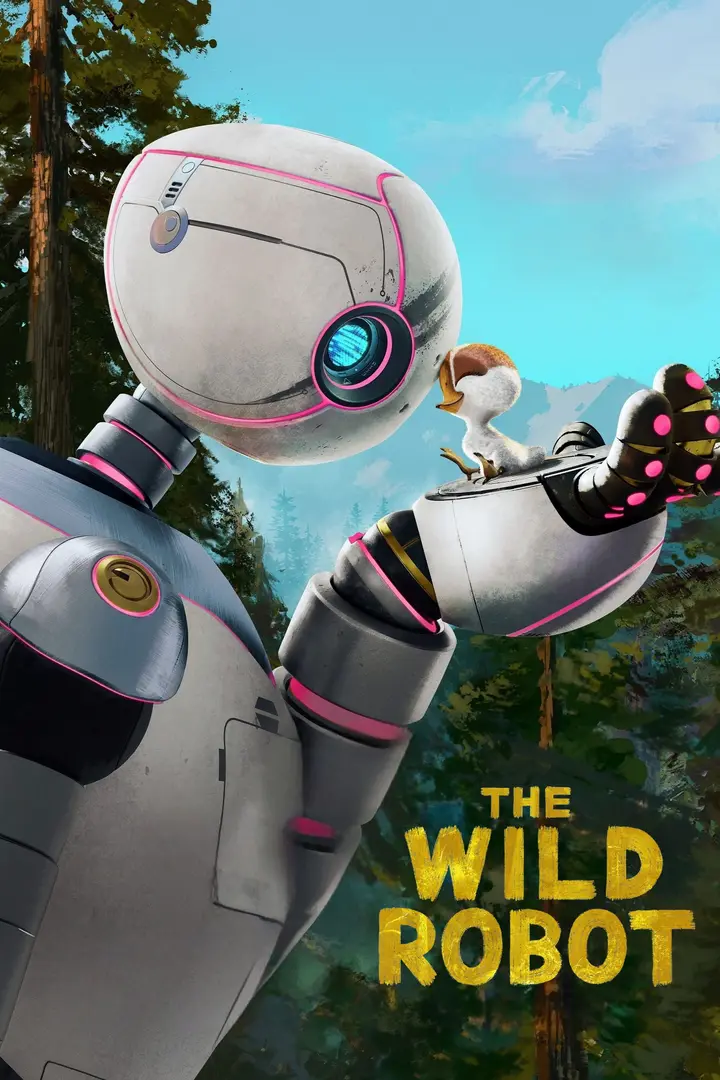
The Wild Robot
A lonely outsider gradually becomes the heart of an entire community in a moving adventure filled with warmth, kindness, and hope.
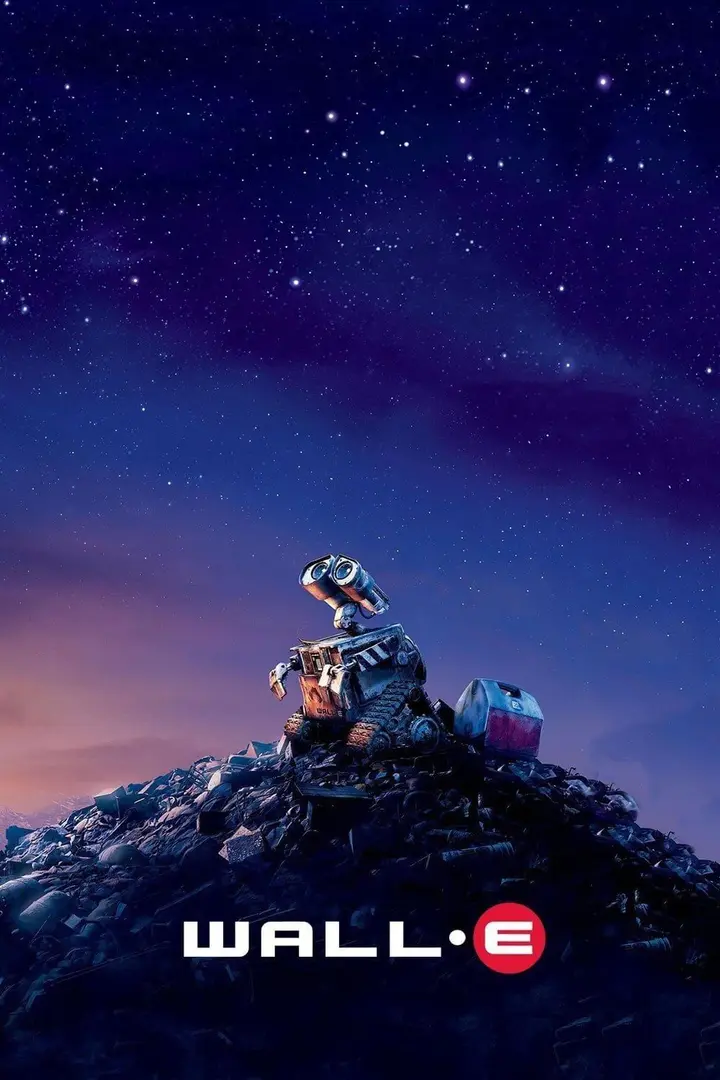
WALL·E
A lonely little robot drifting through the ruins of Earth unexpectedly discovers love, transforming a science-fiction adventure into one of animation's most touching romances.
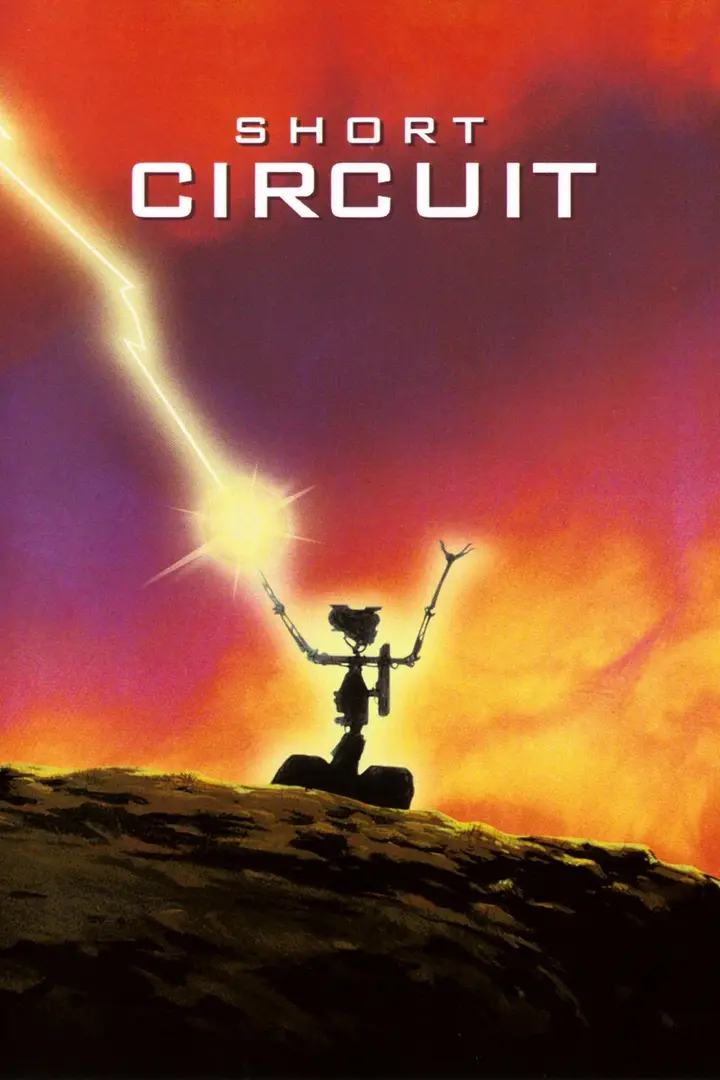
Short Circuit
A playful science fiction adventure about a runaway robot discovering the world with the wonder of a child.
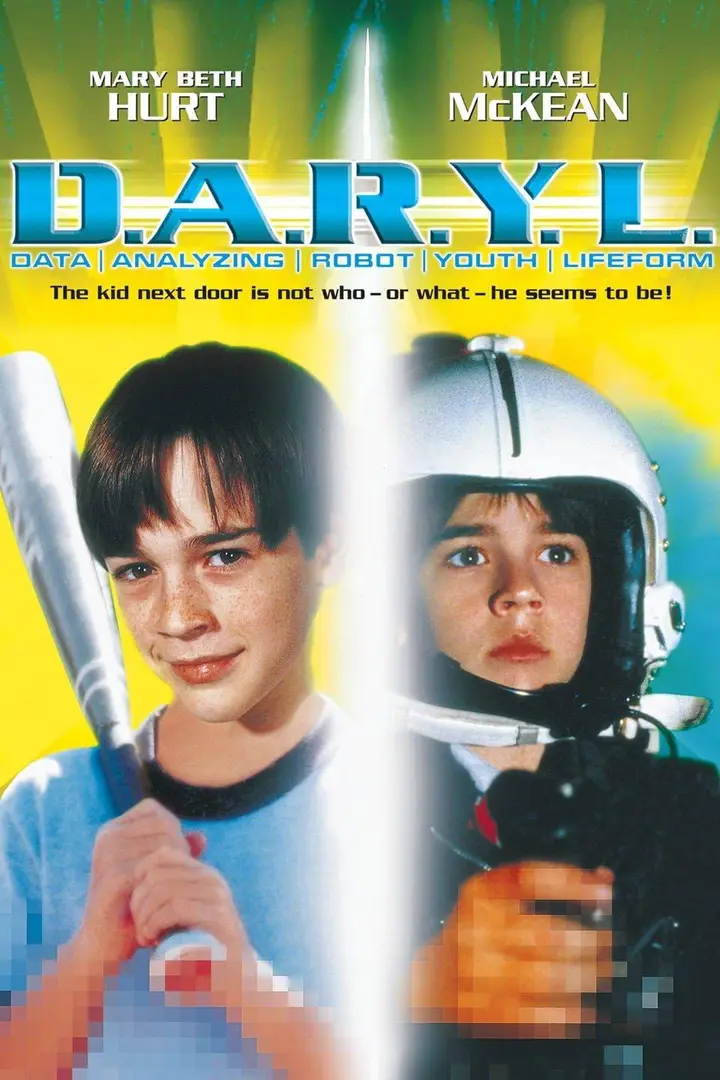
D.A.R.Y.L.
A tender science fiction adventure about a mysterious boy discovering that being human means more than the way he was made.