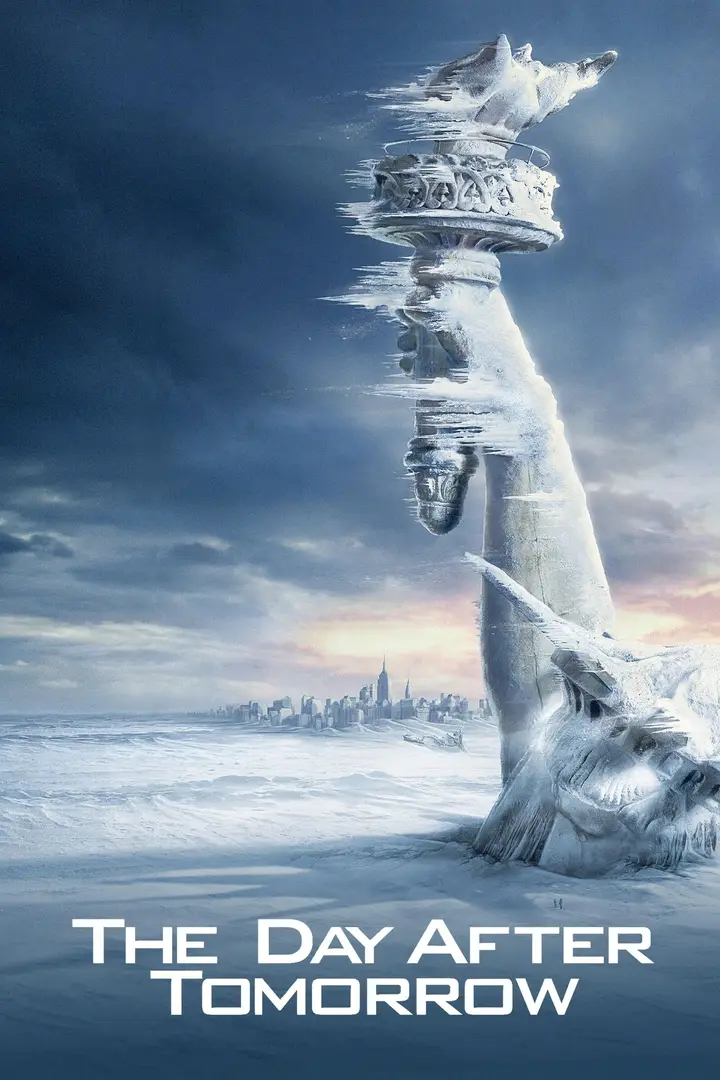
The Day After Tomorrow
AgeMinimum 10Recommended 12+
An exhilarating disaster adventure of a father crossing a world transformed by extreme weather to reach his son and rebuild the bond between them.
When climatologist Jack Hall warns of an approaching climate catastrophe, extreme weather begins transforming the planet. As cities face unprecedented conditions, Jack sets out on a dangerous journey to New York City, where his son Sam is trapped along with other survivors. To reach him, Jack must cross a world reshaped by storms, floods, and freezing temperatures — a journey that is about more than survival, as he also works to close the distance that had grown between him and his son.
- Release Year
- 2004
- Runtime
- 124 min
- Studio
- 20th Century Fox
- Format
- Live Action
- Genre
- Action, Adventure, Drama, Science Fiction
- Mood
- Epic, Intense
- MPAA Rating
- PG-13
The Day After Tomorrow transforms a familiar world into a place where nothing feels safe or predictable any longer. Streets, buildings, and cities that once offered shelter become dangerous obstacles as nature rewrites the rules of everyday life.
At the center of the disaster is a simple human journey. Jack Hall isn't only trying to survive in a changing world — he is trying to reach his son. The distance between them is real, but it also mirrors the emotional distance that existed between them before the crisis began, giving his journey a personal weight beyond survival itself.
As Jack crosses an increasingly dangerous landscape, Sam and the other survivors must discover their own strength. They learn that survival depends not only on physical endurance, but on cooperation, patience, and trusting the people around them.
The film finds its greatest strength by placing human relationships inside an enormous natural event. Frozen streets, abandoned buildings, and extreme conditions create the adventure, but the reason the journey matters is the bond between a father and son who refuse to stop searching for each other.
Why It Stands Out
The Day After Tomorrow pairs striking disaster imagery with a deeply personal family journey, turning a global crisis into the story of a father who refuses to stop searching for his son.
Its greatest strength lies in the contrast between the enormous scale of the disaster and the simple human motivation at its center. The world may be changing, and cities may be disappearing under storms and ice, but the emotional core stays the same: people find strength because someone they love is waiting to see them again.
Parents’ Insight
In difficult moments, children and parents can discover new strength in themselves and in each other. Protection isn't only about keeping danger away — it's also about building trust, communication, and the willingness to cross difficult distances for the people we love.
Crises can change the way we see each other. Sometimes the hardest journeys are the ones that help us find our way back to the relationships that matter most.
Parents’ Guide
What to know before you press play
Six things parents ask about, rated on the same scale for every film and series in the collection.
- Scary intensity
- Moderate (3 of 5)
- Violence
- Mild (2 of 5)
- Language
- Mild (2 of 5)
- Emotional intensity
- Mild (2 of 5)
- Sexual content
- None (0 of 5)
- Substance use
- Moderate (3 of 5)
Content notes
- Intense natural disaster sequences with scenes of peril and character deaths.
Parent guidance
Intense disaster sequences and peril; some scenes may be frightening for younger viewers; themes of survival and loss.
Questions Parents Ask
What is The Day After Tomorrow about?
When climatologist Jack Hall warns of an approaching climate catastrophe, extreme weather begins transforming the planet. As cities face unprecedented conditions, Jack sets out on a dangerous journey to New York City, where his son Sam is trapped along with other survivors, crossing a world reshaped by storms, floods, and freezing temperatures to close the distance that had grown between them.
What age is The Day After Tomorrow suitable for?
Minimum age: 10. Recommended age: 12+. Large-scale disaster imagery including flooding, freezing, and depictions of large-scale loss of life (mostly implied rather than shown directly). Intense peril throughout but no graphic violence.
Is The Day After Tomorrow scary?
- Large-scale disaster imagery: floods, extreme cold, destruction
- Implied large-scale loss of life
- Sustained peril and survival tension throughout
- Graphic violence or gore
The Day After Tomorrow's disaster-movie scale and implied mass casualties make it more intense than most family films, best suited for kids old enough to process large-scale catastrophe imagery. The father's cross-country journey to rescue his son adds sustained personal stakes on top of the global disaster.
Is The Day After Tomorrow worth watching?
The Day After Tomorrow pairs genuinely striking disaster spectacle with a father-son relationship that gives the destruction real emotional stakes, elevating it above a typical disaster movie through that specific, personal focus. Its large-scale disaster spectacle is grounded by a father-son rescue story, giving the destruction real emotional stakes beyond special effects.
What is The Day After Tomorrow based on?
The Day After Tomorrow is not a direct adaptation but takes inspiration from The Coming Global Superstorm, a non-fiction book by Art Bell and Whitley Strieber about abrupt climate change. Director Roland Emmerich and co-writer Jeffrey Nachmanoff built an original disaster-movie screenplay around that idea.
Talk About It
Jack Hall crosses a transformed world to reach his son Sam. Discuss family distance, reconciliation, and what people do for each other in a crisis.
- Why does Jack's journey to reach Sam matter as much as the disaster itself?
- What does the distance between Jack and Sam represent beyond just the physical miles?
- How do Sam and the other survivors show strength that isn't just about physical toughness?
- Why might a crisis sometimes bring people closer instead of further apart?
- What does the film suggest about the kind of protection that matters most in hard times?
- Have you ever had a difficult situation actually improve a relationship with someone in your family?
- Why do you think the film chose to make this story personal instead of only about the disaster?
- What would you want a parent or family member to know if you were separated during something difficult?
Turn this film into a ready-to-use class discussion
Use the Teacher Resources already attached to this film. Choose the questions you want, then print, copy or share the result.
Similar Movies
Independence Day and Jurassic World bring large-scale destruction and survival pressure closest to the disaster-movie lane. Apollo 13, Interstellar and The Martian shift crisis into science and space, while Tomorrowland adds a more optimistic speculative-adventure turn.

Independence Day
A triumphant science fiction adventure of global unity, impossible odds, and ordinary people finding the courage to defend their world.

Apollo 13
A gripping space adventure of skill, teamwork, and calm determination as a crew and the people on Earth solve one impossible problem after another.
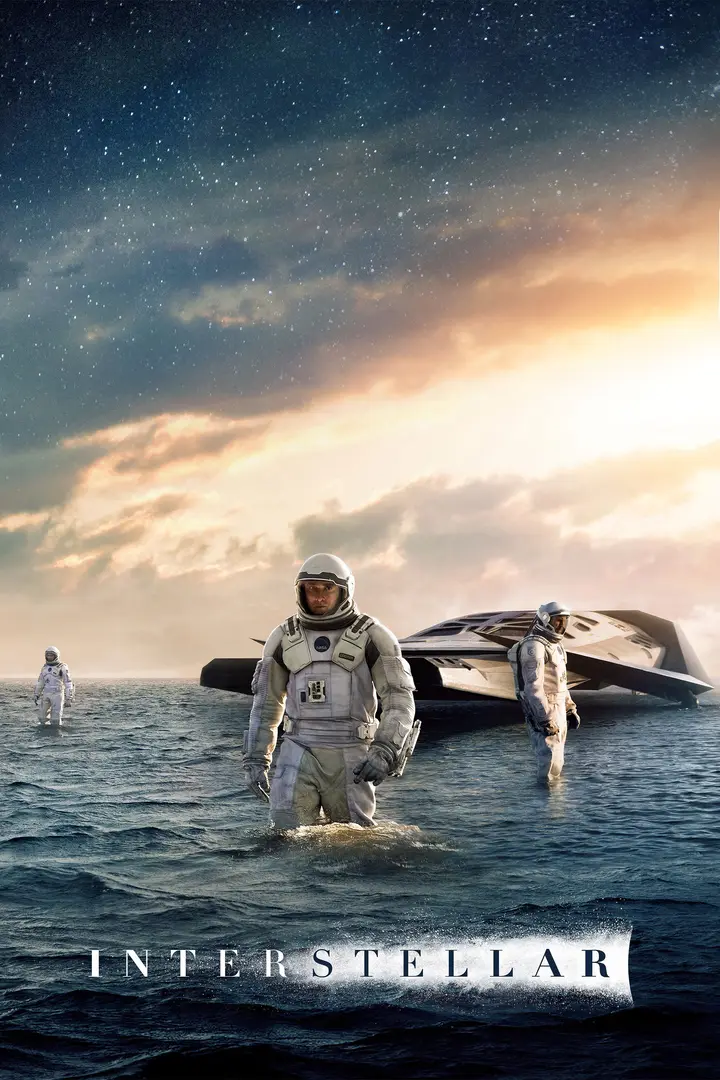
Interstellar
Distant worlds, astonishing cosmic imagery and the pull of a father–daughter bond make this science-fiction epic as intimate as it is vast.

The Martian
A space adventure of Mars landscapes, scientific discovery, and one astronaut learning to survive in a world no human has explored before.
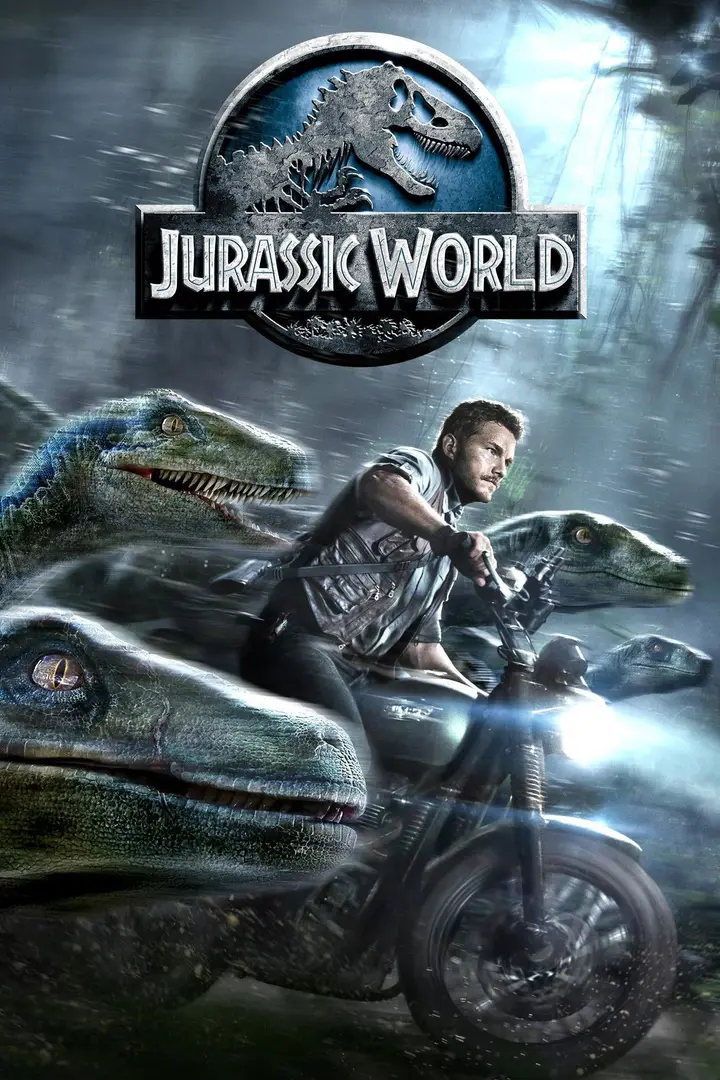
Jurassic World
A thrilling adventure where a world once thought impossible becomes reality, giving a new generation a chance to experience dinosaurs.

Tomorrowland
A futuristic adventure of hidden cities, impossible inventions, and a journey into a world built from dreams of tomorrow.