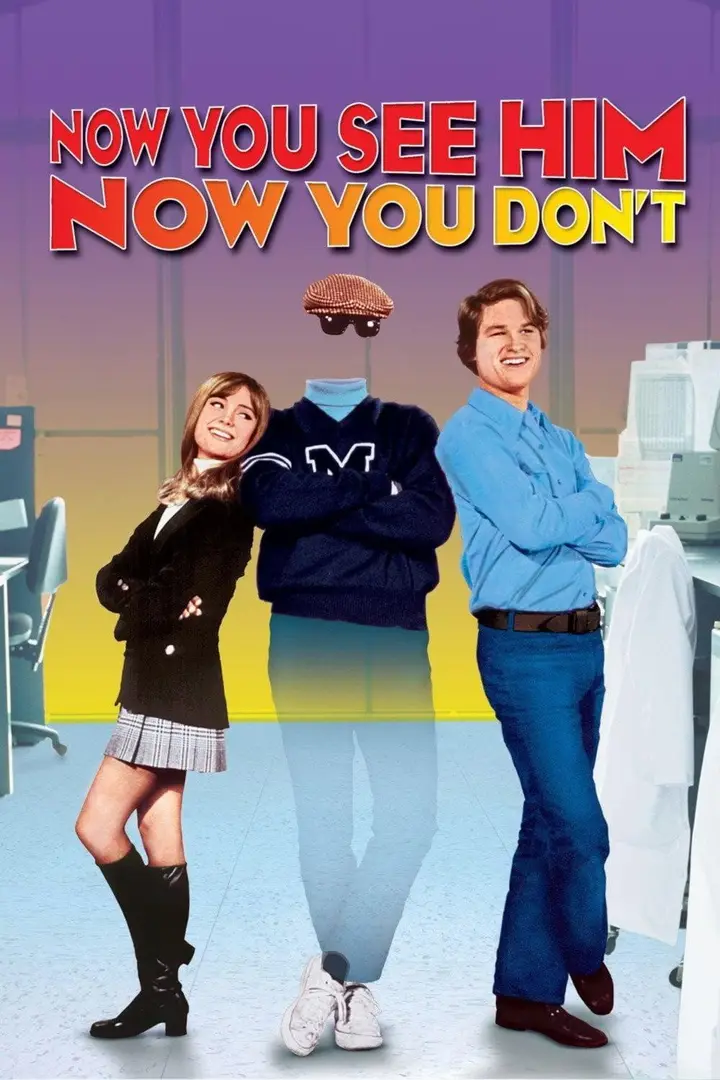
Now You See Him, Now You Don't
AgeMinimum 6Recommended 7+
A nimble, good-natured science comedy with invisible mischief, collegiate chaos, and the escalating suspicion that one experiment is never quite enough.
At financially troubled Medfield College, Dexter Riley is working on an experiment when lightning strikes the laboratory and unexpectedly alters his formula. He soon discovers that the resulting substance can make objects — and people — temporarily invisible, a breakthrough that attracts some decidedly unwelcome attention.
- Release Year
- 1972
- Runtime
- 88 min
- Studio
- Walt Disney Productions
- Format
- Live Action
- Genre
- Comedy, Science Fiction
- Mood
- Light, Funny
- MPAA Rating
- G
Dexter Riley first realizes something extraordinary has happened when part of his glasses disappears. Fingers follow. Before long, Richard Schuyler is being sprayed invisible in the laboratory while Dexter and Debbie try to understand exactly what they have stumbled upon. The discovery has the wonderfully casual quality of Medfield science: lightning interferes with an experiment, something impossible happens, and the students immediately start testing what else they can do with it.
Invisibility proves far too entertaining to remain a laboratory demonstration. An unseen Dexter can manipulate a golf ball, objects apparently move by themselves, and Schuyler discovers that volunteering as a test subject comes with practical inconveniences nobody considered beforehand. Water reverses the effect, giving every experiment an additional comic vulnerability. Meanwhile, Dean Higgins remains magnificently capable of misunderstanding almost everything happening around him.
The return of A.J. Arno gives all that invisible fun a little more trouble to contend with. Medfield is already struggling financially, and an invention capable of making people and objects disappear is exactly the sort of discovery likely to interest someone beyond Dexter’s circle of enthusiastic experimenters. Once again, the students have stumbled onto something extraordinary before anyone has had time to consider the consequences — a situation Medfield seems almost uniquely designed to produce.
Why It Stands Out
Invisibility is a perfect match for the Dexter Riley series because the fun begins almost immediately. Empty clothes, floating objects, disappearing body parts and unseen people turn the experiment into physical comedy, while ordinary water provides the wonderfully simple weakness that can bring everything crashing back into view.
Parents’ Insight
Discovering that you can do something is usually more exciting than stopping to ask whether you should. Dexter and his friends capture that youthful rush perfectly: curiosity comes first, while judgment and responsibility have to catch up with the experiment.
Parents’ Guide
What to know before you press play
Six things parents ask about, rated on the same scale for every film and series in the collection.
- Scary intensity
- Minimal (1 of 5)
- Violence
- None (0 of 5)
- Language
- None (0 of 5)
- Emotional intensity
- Minimal (1 of 5)
- Sexual content
- None (0 of 5)
- Substance use
- Mild (2 of 5)
Content notes
- Mild comic peril involving a casino heist plot; no violence beyond typical slapstick.
Questions Parents Ask
What is Now You See Him, Now You Don't about?
Dexter Riley invents an invisibility spray that a criminal plans to steal and exploit. At financially struggling Medfield College, student Dexter Riley accidentally develops a spray that makes people and objects invisible. The discovery appears capable of saving the school, but criminal A. J. Arno sees a better use for it. Dexter and his friends must recover the formula through a series of invisible tricks, chases, and comic reversals.
What age is Now You See Him, Now You Don't suitable for?
Minimum age: 6. Recommended age: 7+. The comic crime capers and slapstick chases stay firmly lighthearted and are generally manageable from age 6. The benefit of the added year mostly shows up in how the caper-plot humor lands with slightly older kids.
Is Now You See Him, Now You Don't scary?
- Comic crime, slapstick chases, and mild peril
- Serious violence or real danger
Content guidance: Comic criminal threat, slapstick fights and chases, mild peril; no serious injury.
Is Now You See Him, Now You Don't worth watching?
A playful Disney science-fiction comedy whose invisibility effects turn every scene into a practical visual puzzle. The second Dexter Riley film turns invisibility into a practical comedy engine. Clothing, footprints, floating objects, vehicles, and misunderstandings keep asking the same visual question: how do you stage action around someone the audience cannot see?
What is Now You See Him, Now You Don't based on?
An original screenplay and film 2 of the Dexter Riley trilogy. It continues the original story and characters introduced in Disney's The Computer Wore Tennis Shoes.
What order should you watch the Dexter Riley films in?
Now You See Him, Now You Don't is the second of the 3 Dexter Riley films in release order. Watch it after The Computer Wore Tennis Shoes (1969) and before The Strongest Man in the World (1975). Release order: 1) The Computer Wore Tennis Shoes (1969, best from age 7); 2) Now You See Him, Now You Don't (1972, best from age 7); 3) The Strongest Man in the World (1975, best from age 7). All three follow Dexter Riley at Medfield College, even though his name is not in the titles. Every film in the series is best from age 7, so a child who enjoys one is ready for the others. All 3 have a full parents’ guide in The Family Film Collection.
Talk About It
Dexter Riley’s invisibility spray may save Medfield College, but it also gives A. J. Arno a tool for theft. Discuss invention ethics, unintended uses, and why the middle film matters within the three-film Dexter Riley story.
- Why does Dexter want the invention to help Medfield College?
- What makes invisibility attractive to Dexter’s friends and dangerous in Arno’s hands?
- When does a harmless prank become irresponsible?
- Should Dexter have shared the formula before he understood its risks?
- How do Dexter’s friends contribute rather than leave him to solve everything?
- What would be the most ethical use of invisibility?
- How does knowing this is film 2 change what you expect from Dexter and Arno?
- Which trilogy invention—computer intelligence, invisibility, or super-strength—would be hardest to control?
Turn this film into a ready-to-use class discussion
Use the Teacher Resources already attached to this film. Choose the questions you want, then print, copy or share the result.
Similar Movies
Medfield science comedy leads with The Computer Wore Tennis Shoes and The Strongest Man in the World; invention slapstick follows through The Absent-Minded Professor and Flubber. A caper and a fractured-fairy-tale mystery—The Great Muppet Caper and Hoodwinked!—supply the comic detour.
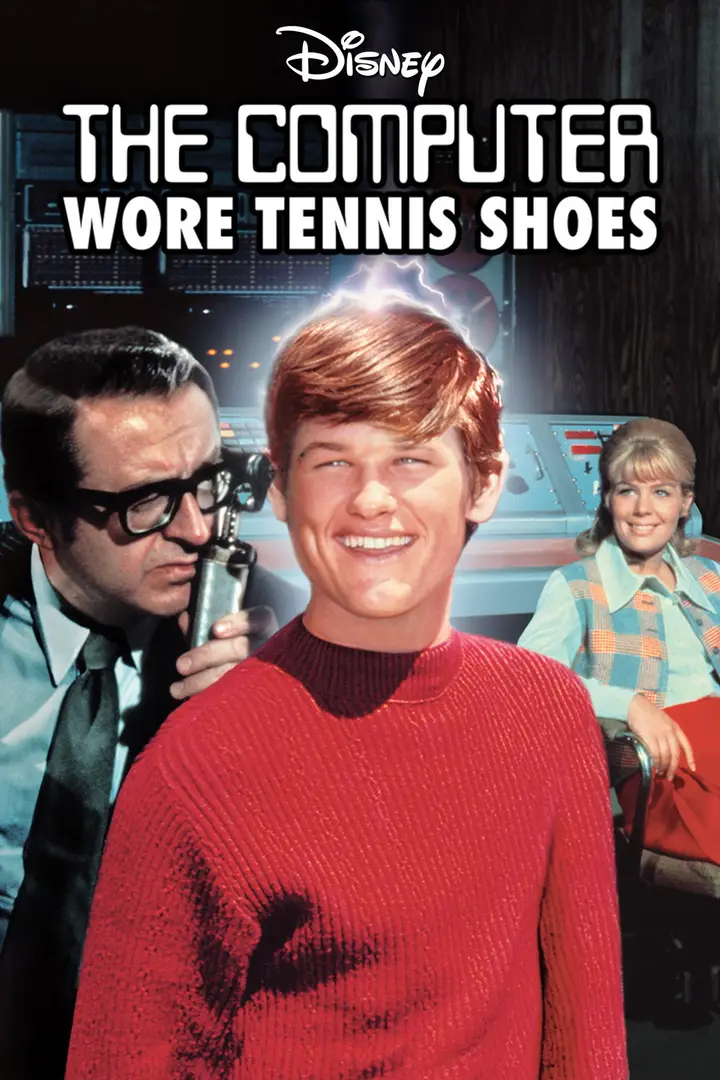
The Computer Wore Tennis Shoes
A breezy campus comedy with youthful mischief, technological absurdity, and the irresistible fun of suddenly knowing far more than anyone expects.
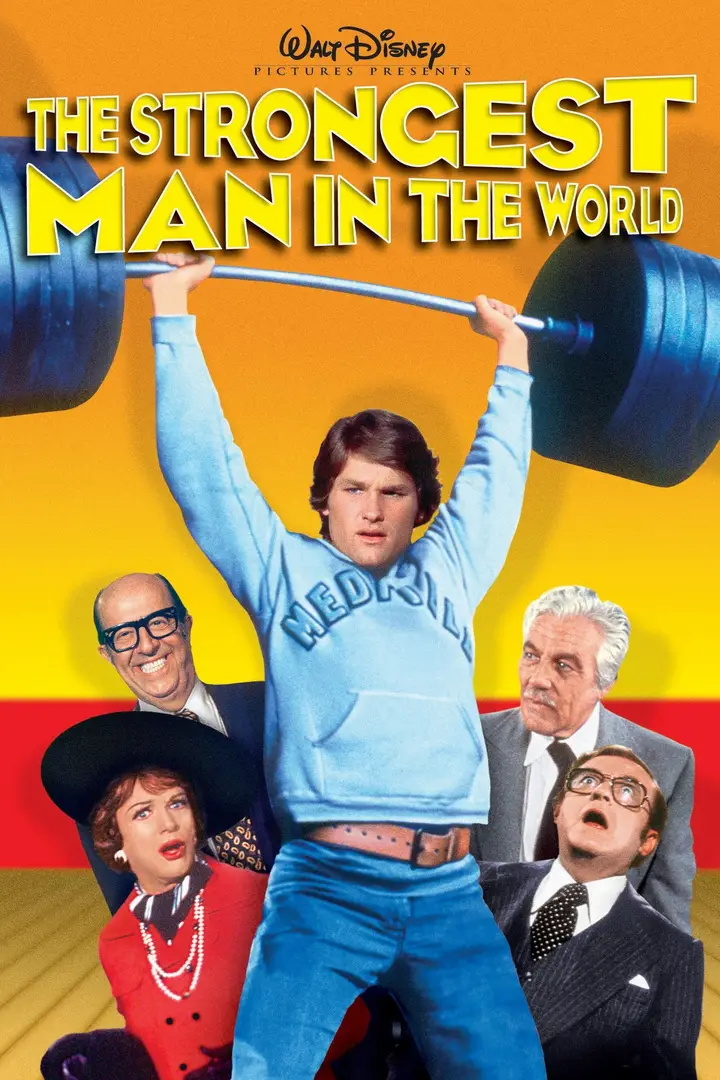
The Strongest Man in the World
A broad, high-spirited college comedy with superhuman slapstick, cheerful absurdity, and the wonderfully unserious logic of Medfield science.
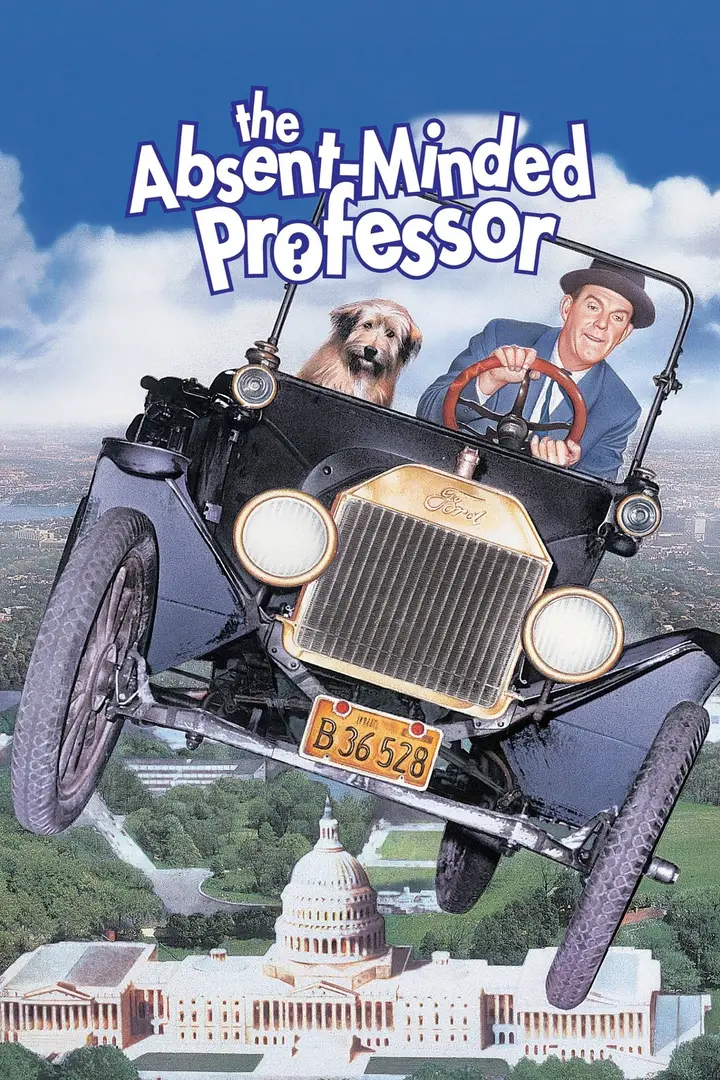
The Absent-Minded Professor
A classic Disney fantasy where an absent-minded inventor turns everyday life into a world of playful surprises and impossible possibilities.
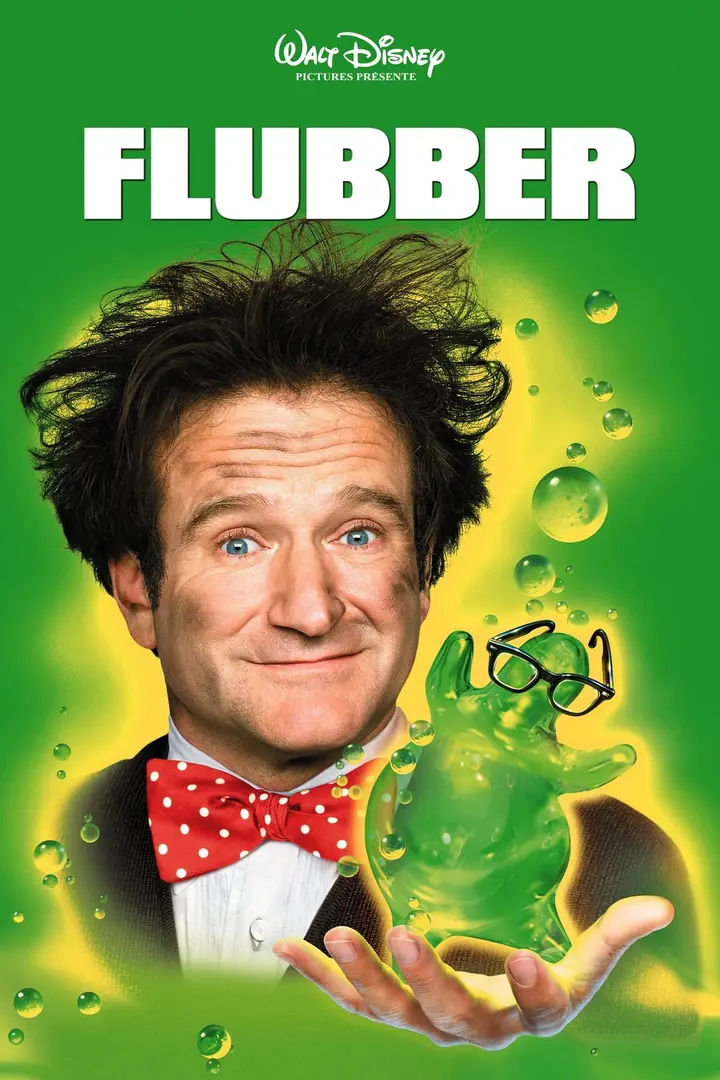
Flubber
A playful science adventure of impossible inventions, a distracted inventor, and a creation that changes everything around him.
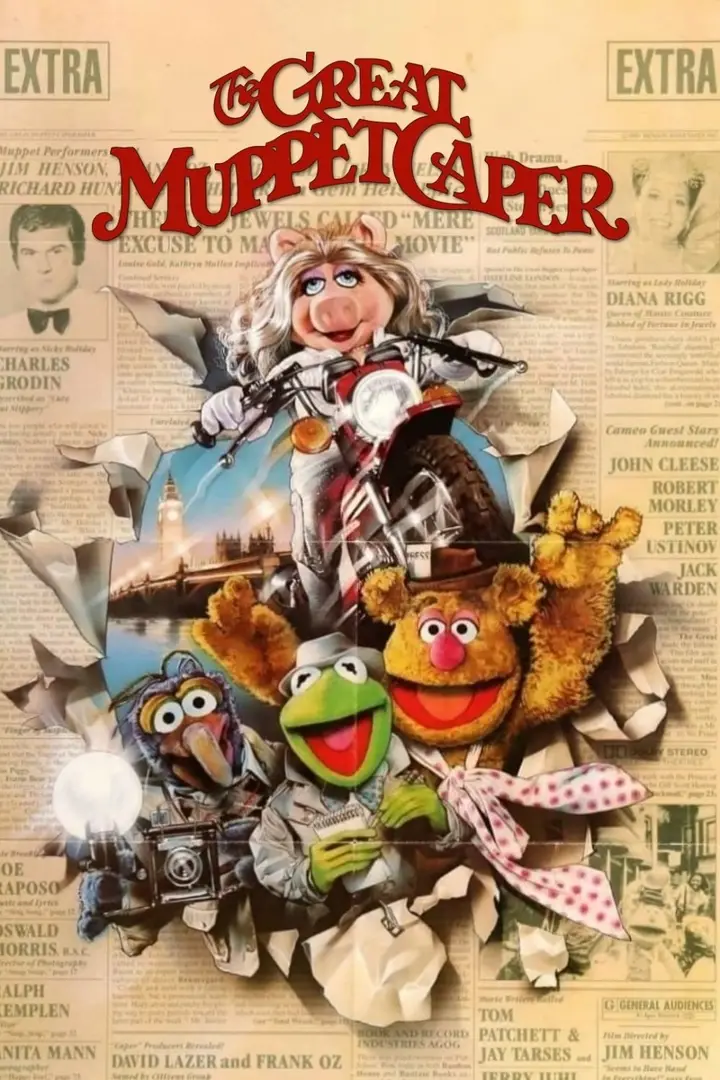
The Great Muppet Caper
A jewel mystery where mistaken identities, musical numbers, and Muppet mischief turn a London investigation into pure entertainment.
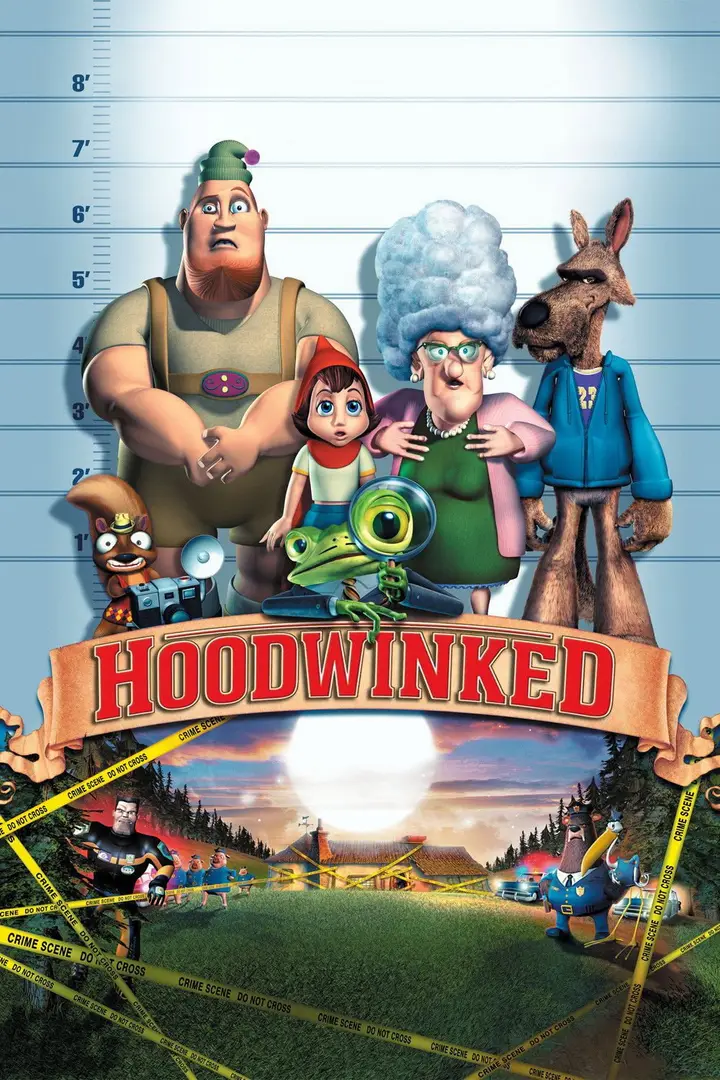
Hoodwinked!
A playful animated mystery adventure of familiar characters, surprising perspectives, and a fairy tale seen in a completely new way.