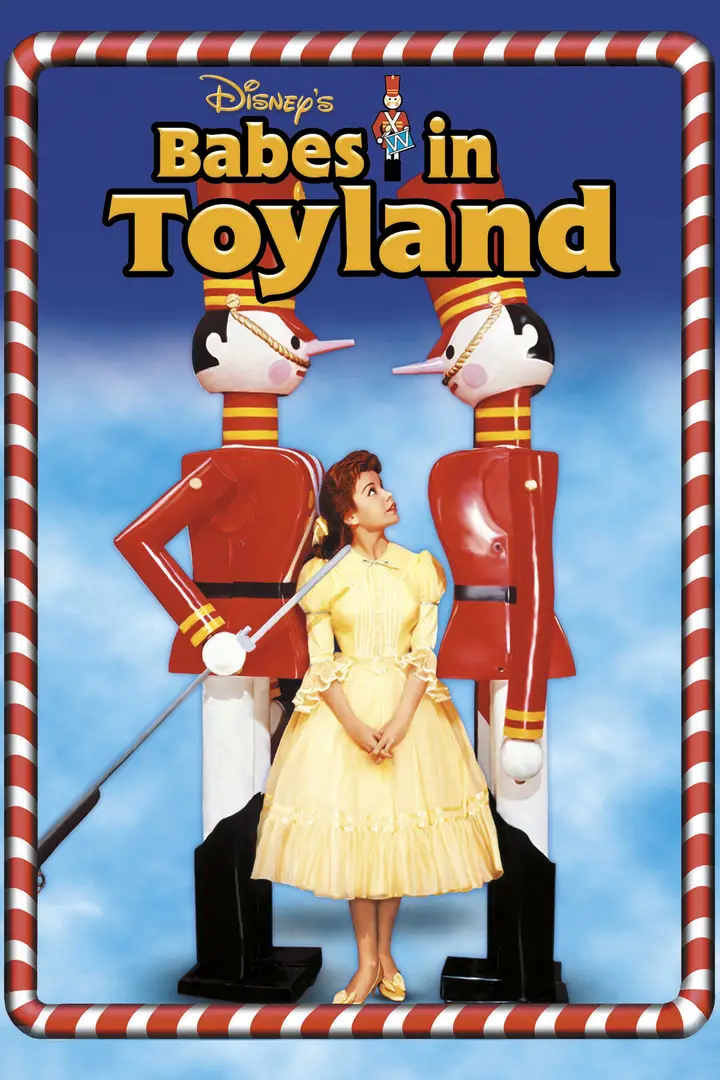
Babes in Toyland
AgeMinimum 4Recommended 6+
Nursery-rhyme songs, toy soldiers and a forest of odd wonders turn this old-fashioned musical into an extravagantly playful fairy tale.
Mary Contrary and Tom Piper are preparing to marry in Mother Goose Village when the miserly Barnaby tries to break them apart and pressure Mary into marrying him instead. His scheme, along with Mary’s missing sheep, carries the group through the Forest of No Return toward Toyland, where songs, nursery-rhyme characters and strange inventions reshape the adventure.
- Release Year
- 1961
- Runtime
- 105 min
- Studio
- Walt Disney Productions
- Format
- Live Action
- Mood
- Magical, Festive, Funny, Playful
- MPAA Rating
- Not Rated
Babes in Toyland withholds Toyland for roughly half the film. Until then, the story stays in Mother Goose Village, where Barnaby's schemes give the musical numbers a clear dramatic problem instead of sending the audience straight into fantasy spectacle.
When the film finally reaches Toyland, its visual scale changes. The Toymaker's workshop, the shrinking ray and the wooden soldiers are not isolated novelties; each grows out of the Christmas-production crisis already under way. The fantasy machinery therefore feels connected to the story, not pasted onto it.
That structure helps explain why the film can feel both theatrical and distinctly cinematic. Victor Herbert's operetta supplies the musical foundation, but Disney rearranges songs, builds large storybook sets and uses stop-motion effects to turn the later sections into something the stage version could not reproduce in the same way.
Why It Stands Out
Disney’s first live-action musical fantasy pairs oversized storybook sets with Ward Kimball’s toy-soldier sequence, where stop-motion craft meets live action. Victor Herbert’s operetta survives in reshaped songs instead of a literal stage transfer.
Parents’ Insight
Barnaby pressures Mary first with lies, then with direct threats. The useful distinction is not simply good versus bad behavior, but how manipulation can narrow someone’s choices before force ever appears.
Parents’ Guide
What to know before you press play
Six things parents ask about, rated on the same scale for every film and series in the collection.
- Scary intensity
- Minimal (1 of 5)
- Violence
- Moderate (3 of 5)
- Language
- Minimal (1 of 5)
- Emotional intensity
- Minimal (1 of 5)
- Sexual content
- None (0 of 5)
- Substance use
- None (0 of 5)
Content notes
- A young man is knocked unconscious and sold to a band of travelers; his fiancée is falsely told he has drowned, and a forged letter separately claims he has abandoned her; the villain later directly threatens him to force a wedding; living, talking trees in the Forest of No Return may startle very young viewers before proving friendly; mild sword fighting and slapstick, including a mallet blow and a toy-cannon battle; occasional name-calling; stereotyped gender roles (passive heroine, active hero); villain menace throughout, resolved comically.
Parent guidance
Suitable from 4, best from 6 — the forced-marriage scheme and a brief shrinking-ray peril may need a quick word for younger or more sensitive viewers.
Questions Parents Ask
What is Babes in Toyland about?
Mary Contrary and Tom Piper are preparing to marry in Mother Goose Village, but Barnaby wants Mary for himself and begins manipulating the people around her. Mary's missing sheep create another practical problem for her household, while Tom becomes caught in Barnaby's interference. The search widens beyond the village into the Forest of No Return and, later, Toyland, where the film shifts from nursery-rhyme comedy toward bigger fantasy spectacle. Songs and Mother Goose characters drive the journey, but the central conflict stays simple: Mary and Tom are trying to protect their future from someone determined to control it.
What age is Babes in Toyland suitable for?
TFFC recommends Babes in Toyland from around age 6, with a minimum age of 4 for children comfortable with cartoonish slapstick and mild villain menace. The film includes a young man knocked unconscious and sold to travelers, a false report of his drowning plus a separate forged letter claiming he has abandoned his fiancée, living trees in the Forest of No Return that may startle younger viewers before proving friendly, mild sword fighting, a toy-cannon battle, and a shrinking-ray sequence in which the villain directly threatens a main character. There is no graphic violence or sustained peril, and the tone stays broadly comic and musical throughout.
Is Babes in Toyland scary?
- A comic villain, a brief scene in a forest of animated trees, and a toy-soldier battle
- Graphic violence or horror-style scares
Babes in Toyland is a musical comedy, not a horror or thriller film. Its tensest moments — Tom's abduction, the false report of his drowning, and Barnaby's direct threat late in the story — use adventurous comic tension, not dread. The Forest of No Return's trees come to life and briefly startle the children before proving more curious than dangerous, and the climactic battle uses a full-scale army of wooden toy soldiers without graphic violence or depictions of injury.
Is Babes in Toyland worth watching?
Babes in Toyland works best as a 1960s Disney musical, not as a tightly driven adventure. Songs and broad comedy repeatedly interrupt the forward motion, and Toyland arrives later than the title may lead first-time viewers to expect. In return, the production design grows increasingly elaborate, culminating in the Toymaker's workshop and Ward Kimball's wooden-soldier sequence.
That structure makes the film a better fit for viewers who enjoy classic studio musicals, theatrical performances and Christmas imagery than for those who want fast pacing. The film also relies on stereotyped gender roles and broad villainy.
Its strongest reason to watch is craft: large storybook sets, adapted Victor Herbert music and practical effects give the film a tactile quality that sets it apart from newer fantasy musicals.
What is Babes in Toyland based on?
Victor Herbert and Glen MacDonough's 1903 operetta Babes in Toyland brought Mother Goose nursery-rhyme characters into one stage story. Disney's 1961 film keeps that basic premise while substantially reshaping the plot and adapting the songs for the screen. It is fictional; its characters come from traditional Mother Goose rhymes, not real events.
Talk About It
Tom and Mary’s wedding plans are disrupted by Barnaby’s lies, while Mother Goose characters and Toyland inventions turn the story into a large-scale musical fantasy. The film supports discussion about misinformation, adaptation and how songs carry plot.
- How does Barnaby try to convince Mary that Tom is gone, and why does she believe him at first?
- Why do you think Gonzorgo and Roderigo decide not to follow Barnaby's original plan?
- What would you do if someone tried to convince you something untrue was true?
- Which Mother Goose characters did you recognize, and did the film surprise you with how it used them?
- Why does the Toymaker get so excited about his new invention, and what goes wrong?
- How does Tom's disguise as Floretta help him rescue the situation?
- What was your favorite song, and how did it move the story forward?
- Why do you think the toy soldiers become the heroes at the end?
Turn this film into a ready-to-use class discussion
Use the Teacher Resources already attached to this film. Choose the questions you want, then print, copy or share the result.
Similar Movies
Babes in Toyland combines operetta, storybook sets and Christmas fantasy in Disney’s early-1960s live-action style. These six films branch toward musical fairy tales, impossible inventions, practical screen magic and festive worlds built for spectacle.
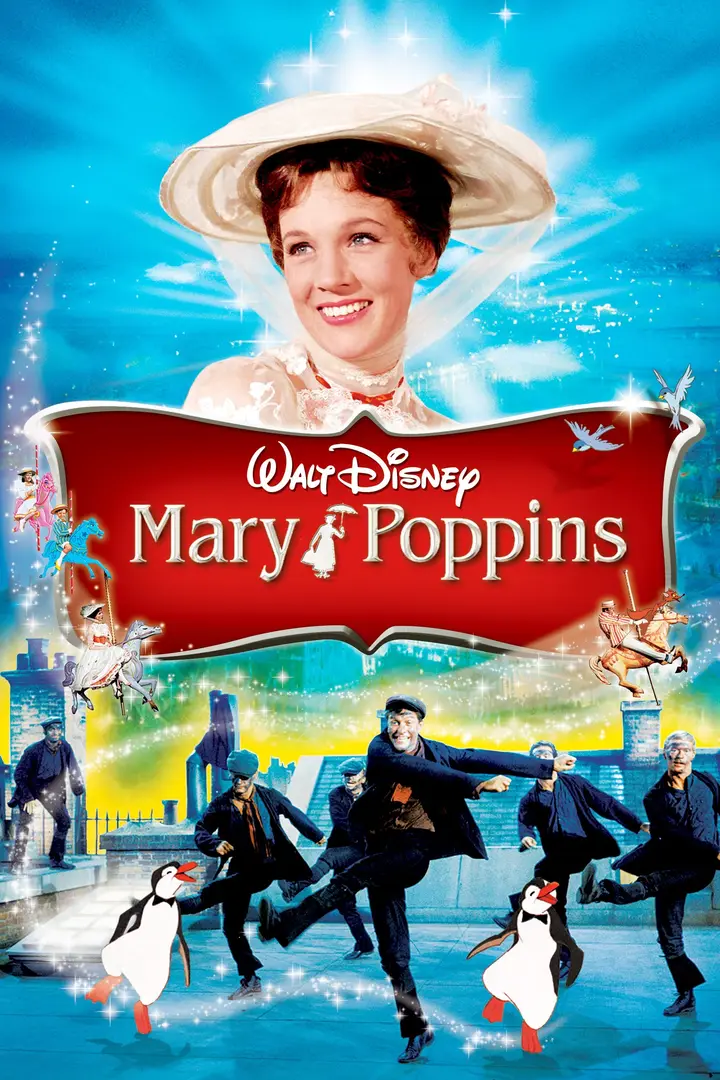
Mary Poppins
A timeless musical journey where a mysterious nanny reveals the wonder and magic hidden within the everyday rhythms of family life.
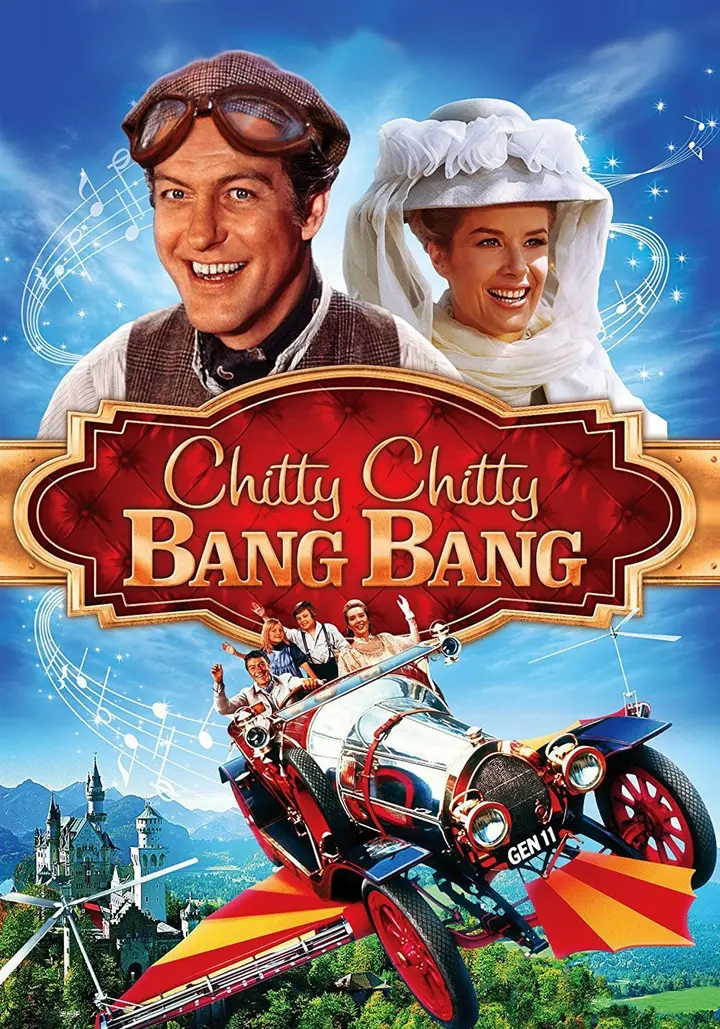
Chitty Chitty Bang Bang
Some families never wait for adventure. They simply find extraordinary ways to turn ordinary days into unforgettable ones.
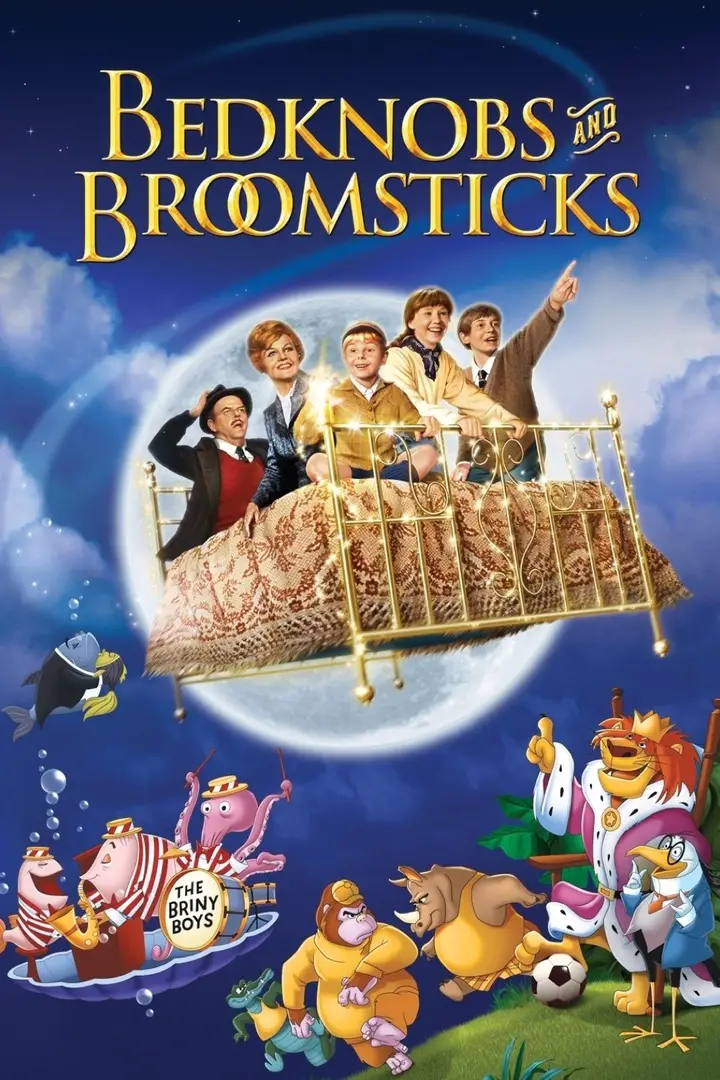
Bedknobs and Broomsticks
A magical wartime adventure where an aspiring witch discovers that courage and imagination can change the course of events.
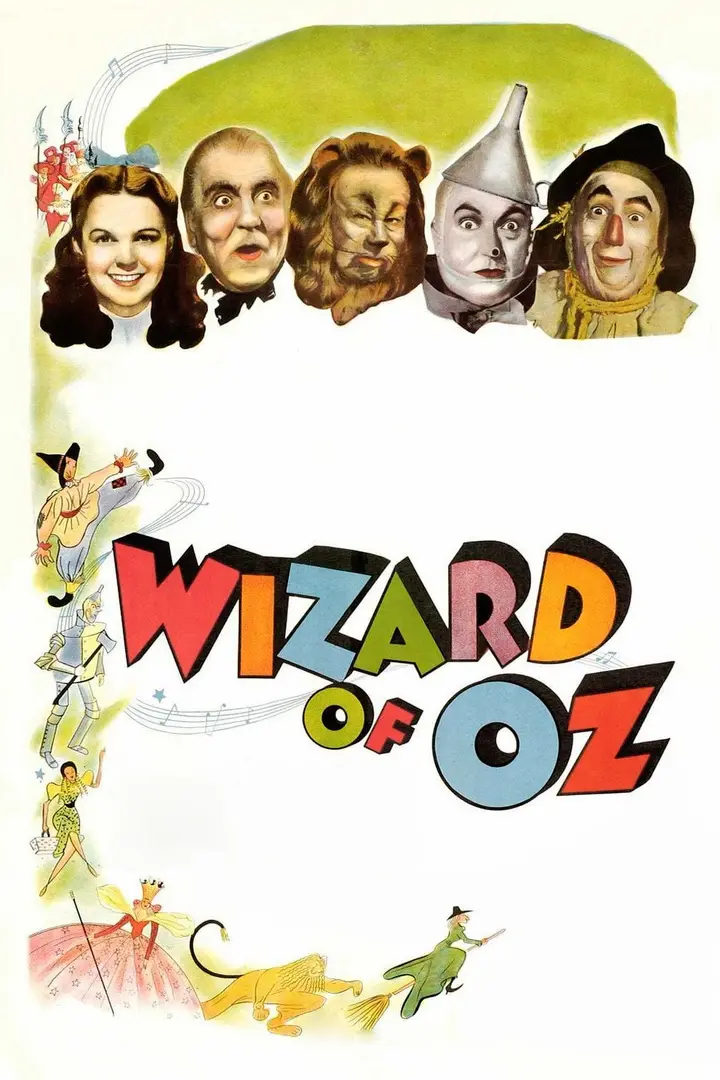
The Wizard of Oz
Sepia Kansas gives way to Technicolor Oz, where Dorothy’s road home winds through songs, witches, unlikely friends, and some of Hollywood’s defining fantasy imagery.
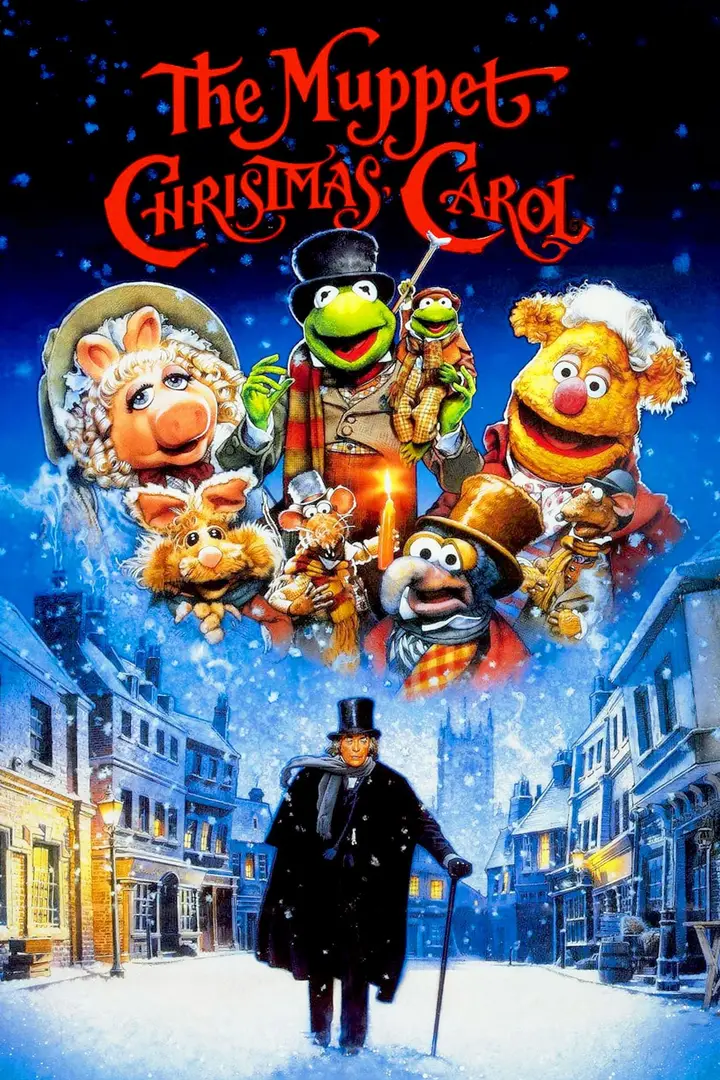
The Muppet Christmas Carol
A lonely miser, three magical spirits, and a Christmas night of reflection transform a familiar morality tale into a journey where seeing the past reveals the possibility of becoming someone new.
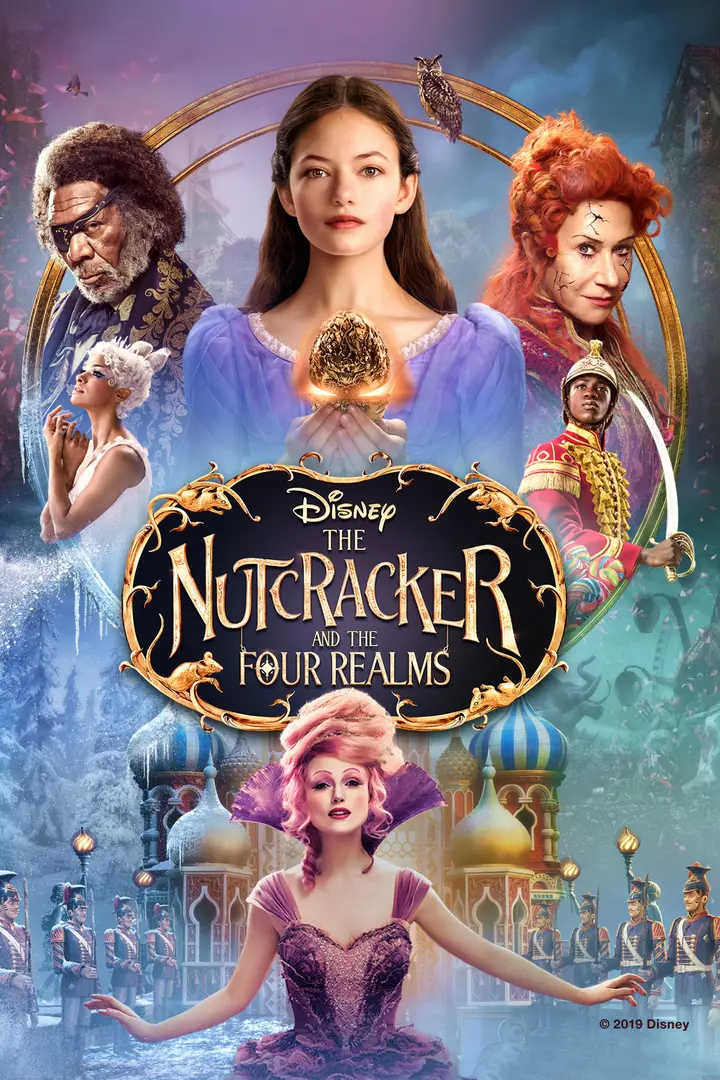
The Nutcracker and the Four Realms
A visually enchanting Christmas fantasy where a journey into a magical kingdom reveals hidden possibilities and forgotten connections.